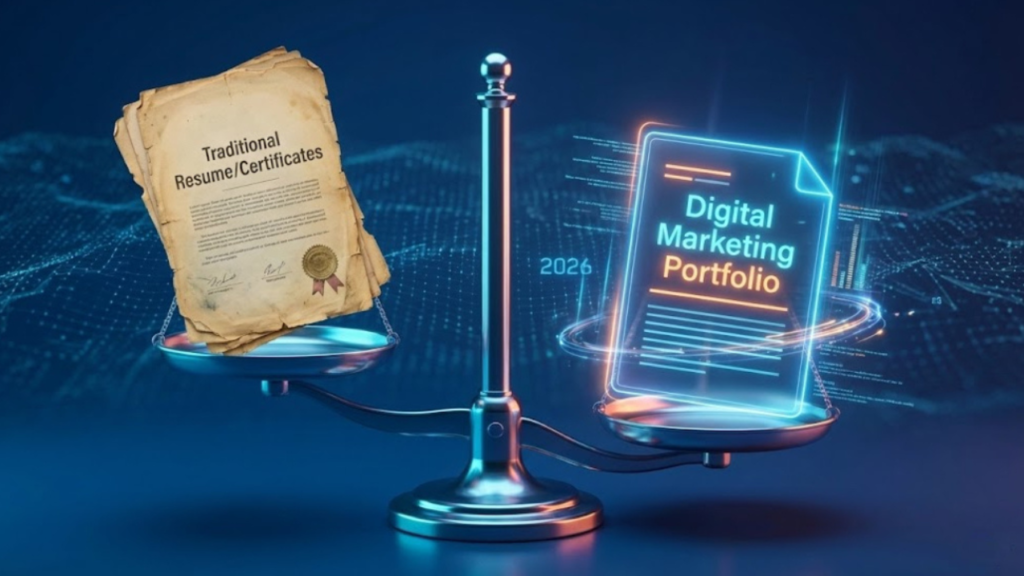
If you want a digital marketing job, freelance clients, or agency opportunities in 2026 or beyond, you must create a powerful digital marketing portfolio that proves your skills.
The market has changed dramatically. Recruiters no longer hire based on certificates alone. Clients have stopped trusting flashy resumes.
Companies now demand proof of execution, analytical thinking, copywriting clarity, and AI-driven marketing skills.
During my 15+ years in digital marketing, and after mentoring more than 50,000 students and consulting 5,000+ businesses globally, I have seen one pattern consistently: the people who grow fastest always use a strong portfolio.
At AADME, we treat the portfolio as the most critical document a student can build for career success. It is the new currency of trust.
In 2026, hiring managers skim portfolios before reading resumes. Freelance clients evaluate case studies more than proposals. Agencies use portfolios to filter the top 10% from the rest.
This shift creates a huge opportunity for anyone who knows how to create a digital marketing portfolio correctly.
This guide shows you everything you need, from templates to tools to examples and real-world case studies.
Whether you are a fresher, beginner, freelancer, or switching careers, you will learn how to create a digital marketing portfolio that gets jobs and clients.

What is a Digital Marketing Portfolio?
A digital marketing portfolio is a structured collection of your work samples, campaigns, strategies, results, and expertise. It proves what you can do by showing real outcomes, not just stating your skills.
In my experience, a portfolio creates instant authority because it displays applied experience. Recruiters want clarity. Clients want evidence. Agencies want capability. A portfolio delivers all three at once.
Your digital marketing portfolio can exist as a standalone PDF or as a digital marketing portfolio website. Both formats work well when crafted with clarity, performance metrics, and strategic thinking.
A strong portfolio also captures your thought process, because companies want to understand how you think before they trust you with campaigns.
A digital marketing portfolio for beginners or freshers does not need paid client work. It must demonstrate your understanding through self-initiated projects, simulations, free campaigns, or volunteer work.
In 2026, AI tools make it easier to create campaigns even without experience. However, human insights and analytical explanations still matter more.
What Your Portfolio Should Show?
- Your marketing logic
- Your ability to plan, execute, and analyze
- Your copywriting approach
- Your campaign structure thinking
- Your results-driven mindset
- Your creativity in presenting concepts
- Your understanding of audience targeting
- Your familiarity with AI marketing workflows
A well-structured portfolio communicates this within minutes.
Action Steps
- Define your niche or direction.
- Pick 4 to 6 strong projects.
- Outline your role in each campaign.
- Show metrics and dashboards clearly.
- Keep your presentation crisp and visual.
Why Your Digital Marketing Portfolio Matters in 2026?
The digital marketing industry has shifted more in the last three years than the previous decade. AI has automated repetitive tasks, tools have matured, and companies now expect marketers to demonstrate skills, not just list them.
That’s why a digital marketing portfolio is no longer optional. It is your core credibility asset.
When I train students or mentor beginners inside AADME, I always emphasise that the portfolio becomes the single most important document for career growth.
It replaces the traditional resume because recruiters want to see how you think, how you execute campaigns, and how you use AI and data for decision-making.
In 2026, companies hire based on three criteria:
- Proven skills
- Clear execution capability
- Ability to work with AI tools
A digital marketing portfolio shows all three at once. It communicates your competence before you even meet the interviewer. In fact, many hiring managers now review portfolios before reading resumes.
This shifts the power to you, especially when you showcase thoughtful campaigns, results, and strategy.
Even beginners benefit. Freshers often fear they have no “real work.”
But the truth is that recruiters value self-made campaigns too. You can design sample ads, build a landing page, optimise a mock website, or create a content calendar for a fictional brand. These projects show initiative and understanding.
During my consulting experience with 5,000+ businesses, I’ve seen portfolios influence trust instantly. When you present results visually, clients make faster decisions.
They see real evidence. They understand your thought process. They view you as an expert even if you’re new.
A good portfolio does more than showcase work. It builds personal brand authority. It positions you as a problem solver. It tells companies you can deliver results in the AI era.
If you’re learning digital marketing from scratch, you can refer to Digital Marketing for Beginners. Once you understand the basics, you can convert your skills into portfolio-ready projects that impress employers.
Why Your Portfolio Matters More Than Your Resume?
A well-crafted portfolio:
- Shows your marketing logic clearly
- Demonstrates real work instead of theoretical claims
- Gives companies confidence to trust you with budgets
- Helps you stand out in crowded hiring pools
- Makes interviews easier because you can walk through your work
- Builds your confidence as a marketer
Companies don’t hire guesswork anymore. They hire clarity. A strong portfolio delivers that clarity instantly.
Essential Sections of a High-Impact Digital Marketing Portfolio
Your portfolio must feel structured, professional, and easy to navigate. Recruiters should understand your expertise within seconds. A strong digital marketing portfolio follows a logical flow that moves from identity to strategy to results.
This formula works whether you are a fresher, beginner, freelancer, or job seeker.
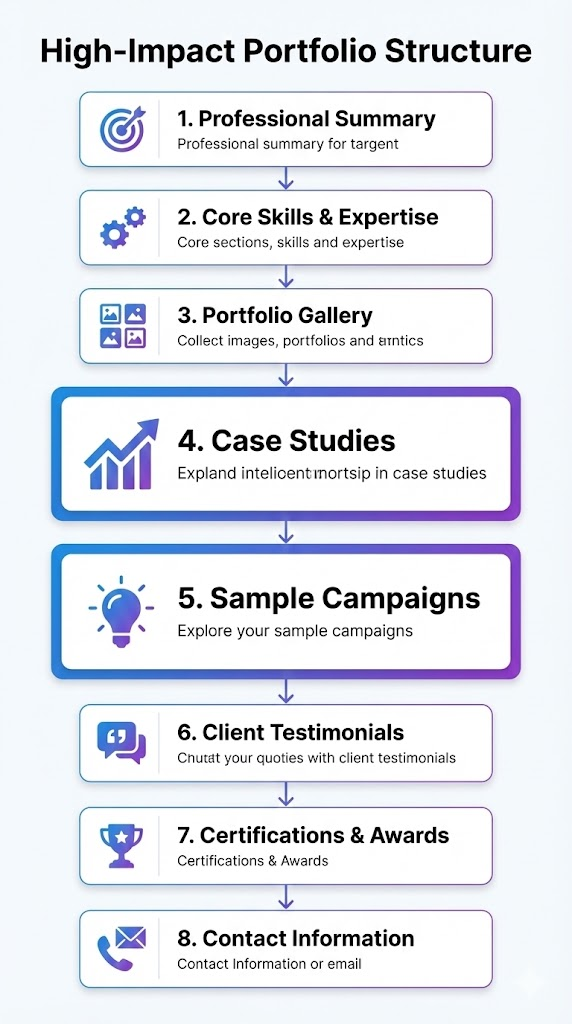
Here are the essential sections that every high-impact portfolio must include:
1. Professional Summary
Your summary sets the tone. It reflects your identity as a marketer. Instead of writing generic lines, share what matters: your area of interest, the problems you solve, and the skills you bring to the table.
Many students at AADME use a positioning line such as “Aspiring Performance Marketer focused on ROI-driven campaigns.” This creates clarity instantly.
2. Skills Overview
List your skills in categories. Grouping them helps recruiters scan easily.
- SEO
- Social media marketing
- Google Ads
- Meta Ads
- Content creation
- Email automation
- AI marketing workflows
- Analytics and reporting
If you’re still learning these areas, “How to Learn Digital Marketing in 30 Days” helps you understand each skill step-by-step.
3. Certifications
Add certifications only if they add value.
Google, HubSpot, Meta, and industry-recognized programs help increase trust. If you come from a future-ready institute like AADME, your certification stands stronger because of practical exposure.
4. Case Studies
Your case studies create the biggest impact. They show your thinking, execution, and problem-solving ability. Include:
- Project background
- Goal and strategy
- Tools used
- Results achieved
- Key learning
Make your case studies visually appealing. Screenshots of dashboards, graphs, and creatives add clarity.
5. Sample Campaigns
If you lack client work, create sample campaigns. Recruiters appreciate effort. Build a sample Google Ads campaign or a mock SEO audit. These show initiative and understanding.
6. Content Samples
Content proves your creativity and communication. Add:
- Social media posts
- Ad copies
- Blogs
- Video scripts
- Email sequences
These elements show your brand voice adaptability.
7. Tools You Use
Listing tools proves your readiness. Tools matter because companies now adopt AI and automation heavily. Mention tools like:
- Google Analytics
- Canva
- SEMrush
- Notion
- ChatGPT
- Ubersuggest
- Mailchimp
- Meta Business Manager
Whenever you use Canva to design visuals, you can refer to Get Canva Pro for Free to access premium features for your portfolio.
8. Contact Information
Make it easy for recruiters to reach you. Add email, LinkedIn, and portfolio website link.
When creating case studies, add performance metrics like CTR, conversions, or organic growth. These metrics help you appear job-ready. If you want to understand job expectations deeper, explore Top Digital Marketing Job Roles and Responsibilities. The clarity will help you design your portfolio better.
How to Create a Digital Marketing Portfolio With No Experience?
One of the biggest concerns beginners face is the lack of real projects. Most freshers ask me, “How do I make a digital marketing portfolio when I have no experience?”
My answer is always the same: experience is created, not waited for. You don’t need paying clients to build strong proof of work.
You can create your own experience through planned, strategic practice projects. Recruiters know beginners won’t have client campaigns, but they still expect portfolio-ready work that shows understanding.
That’s why self-made projects matter so much.
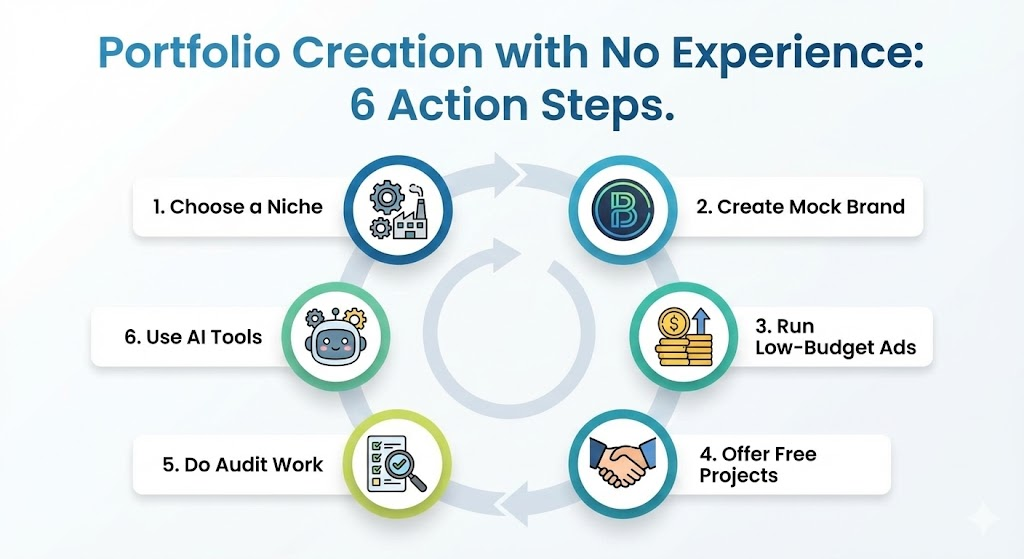
Here is how you create a powerful portfolio even if you’re a complete beginner:
1. Choose a niche to practice
You can pick from:
- Real estate
- Fitness
- Ecommerce
- Coaching
- Retail
- Restaurants
When you pick a niche, your campaigns look more professional because they follow a theme.
2. Create a mock brand
You can build a fictional brand and design:
- Logo
- Brand colors
- Target audience profile
- Brand positioning
This allows you to create real-looking campaigns.
3. Run small-budget campaigns
Even 100 to 200 rupees on Meta Ads or Google Ads helps you collect real data. The goal is not to drive sales but to show understanding of campaign setup, targeting, and analysis.
You can learn this process through Google Ads vs Facebook Ads, which explains how both platforms work differently.
4. Do free projects
Offer your skills for free to:
- Small shops
- NGOs
- Friends with businesses
- Local cafes
- Freelancers needing visibility
Free projects give you real-world case studies quickly.
5. Do audit-based work
SEO audits, social media audits, or website audits create strong portfolio content because they demonstrate analytical thinking.
6. Use AI tools to create assets
AI helps you create sample campaigns, SEO plans, content calendars, automated workflows, and even ad copies. However, always modify the AI outputs with your own strategic thinking.
Recruiters want clarity in your logic, not generic AI content.
If you’re starting from zero, “How to Start a Career in Digital Marketing in 2026” gives a roadmap. Use that roadmap to create your first projects and convert them into portfolio items.
Step-by-Step Guide: How to Make a Portfolio for Digital Marketing
Creating a digital marketing portfolio becomes easier when you follow a process. Most students and professionals get stuck because they don’t know where to start or how much detail to include.
Over the years, after reviewing thousands of student portfolios at AADME, I’ve developed a clear step-by-step process that works for freshers, job seekers, freelancers, and career switchers.
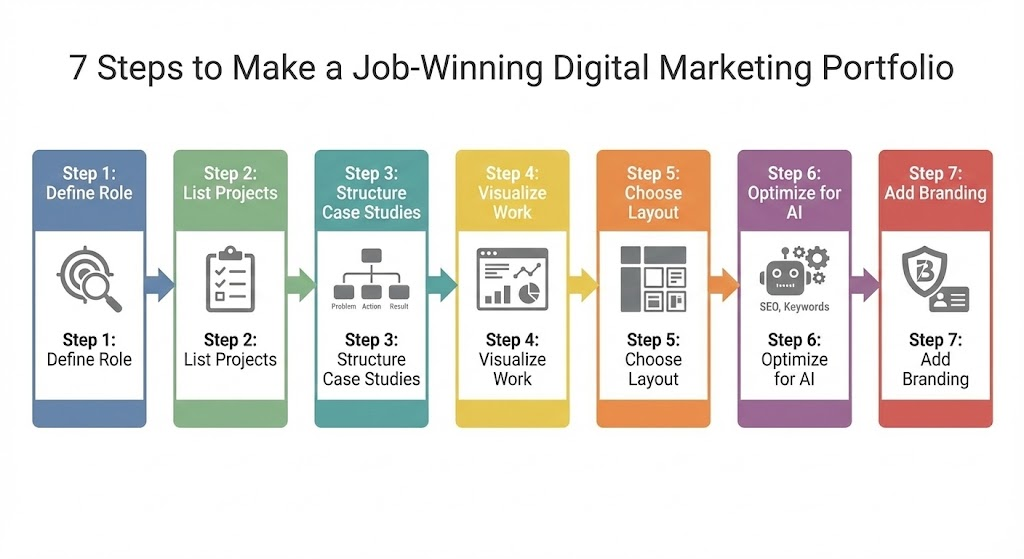
This step-by-step guide ensures your portfolio looks structured, professional, and aligned with hiring expectations in 2026.
Step 1: Define Your Role and Direction
Before you build anything, decide what direction you want your career to move in. Your portfolio should reflect your strengths instead of presenting a random mix of skills.
Possible roles include:
- SEO specialist
- Social media marketer
- Content strategist
- Google Ads expert
- Meta Ads specialist
- Email marketer
- Marketing automation specialist
- Performance marketer
Your portfolio should revolve around your chosen role. This creates clarity for recruiters and prevents your work from looking scattered.
If you’re unsure about your direction, refer to Digital Marketing Career Roadmap for Beginners. It gives a simple path to identify the best-suited role based on your strengths.
Step 2: List Down All the Projects You’ve Worked On
Most beginners underestimate how much work they already have. I always advise students to list everything they’ve created, including:
- Sample campaigns
- Practice SEO audits
- Content calendars
- Competitor research
- Website optimizations
- Social media designs
- Email funnels
- PPC sample setups
This list becomes your raw material. From here, you select the best pieces for your portfolio.
Step 3: Structure Your Case Studies
A case study is the heart of your portfolio. Recruiters rely heavily on case studies to understand your execution ability.
A strong case study includes:
- Context: What was the brand or project?
- Problem: What challenge were you solving?
- Strategy: What actions did you plan?
- Execution: What steps did you take?
- Results: What changed after your actions?
- Learnings: What insights did you gain?
When I mentor students, I emphasise one thing: recruiters don’t expect perfect results. They expect clarity in thinking. Your explanation matters more than the numbers you show.
If you want inspiration on how professionals create strategies, refer to Digital Marketing Strategy for SAAS Companies. It shows how experts frame their approach.
Step 4: Visualize Your Work with Screenshots
Visual proof increases trust. Instead of writing long paragraphs, add:
- Analytics dashboards
- Keyword ranking screenshots
- Ad manager screens
- Engagement reports
- Content samples
- Landing page previews
Visuals turn your portfolio into a storytelling tool. Recruiters get a clearer understanding of your work style within minutes.
Step 5: Create Your Portfolio Layout
You can build your portfolio in three formats:
Format 1: PDF Portfolio
Easy to share. Great for freshers.
Format 2: Digital Marketing Portfolio Website
Most professional-looking option. Perfect for freelancers and job seekers.
Format 3: Slide Deck Portfolio
Good for interviews and presentations.
If you plan to create a website version, refer to How to Increase Website Traffic. It will help you understand website structure and optimization better.
Step 6: Optimize Your Portfolio for AI Scanners
AI is now used by employers for screening. Optimise using:
- Clear headings
- Short paragraphs
- Structured bullets
- Navigation links
- Keyword relevance without stuffing
These elements make your portfolio AI-overview friendly.
Step 7: Add Your Personal Branding Elements
Personal branding increases memorability. Add:
- Unique color theme
- Personal logo
- Professional photo
- Clear storytelling style
The goal is not decoration. The goal is clarity and identity.
When you create sample campaigns or audits for your portfolio, practice using real tools. This process becomes easier if you refer to AI Tools for Digital Marketing. These tools speed up your work and help your portfolio look more professional.
Digital Marketing Portfolio Examples for Beginners and Freshers
Most freshers struggle because they don’t know what a good portfolio looks like. They only see agency portfolios, which are designed for clients, not hiring managers.
A fresher’s digital marketing portfolio must be structured differently. It should highlight skills, learning, thought processes, and execution capability- even if the campaigns were self-created.
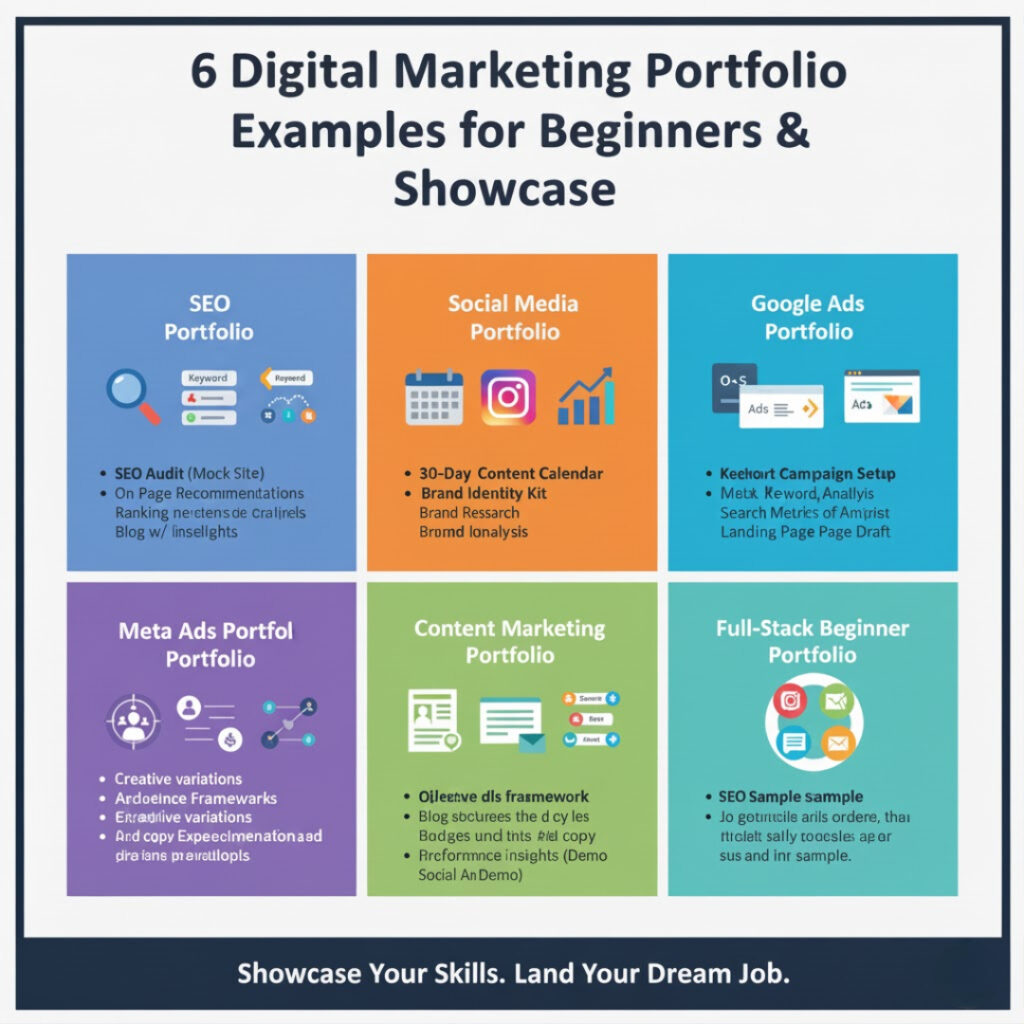
Below are real-world portfolio structures based on what has worked for thousands of students trained under the AADME ecosystem. These examples help you visualise how to structure your own.
Example 1: SEO Beginner Portfolio
Sections included:
- SEO audit for a mock website
- Keyword research report
- Sample on-page optimization recommendations
- Screenshot of ranking improvements (simulated)
- Competitor analysis breakdown
- Blog written with proper keywords
- Google Search Console insights (demo account)
Recruiters appreciate SEO portfolios that show clean structuring and data-based insights. Your ability to explain why you chose specific keywords matters more than showing rank jumps.
For deeper understanding, refer to How You Can Increase Your Organic Search Ranking. Apply those strategies in your sample projects.
Example 2: Social Media Portfolio for Beginners
Sections included:
- 30-day content calendar
- Instagram post designs
- Brand identity design
- Hashtag research
- Campaign concept for engagement
- Storyboard for reels
- Social analytics screenshots
Creativity matters in social media portfolios. However, recruiters also want to see your strategy. Show your content reasoning, not just designs.
Example 3: Google Ads Portfolio Example
Sections included:
- Mock campaign setup
- Keyword grouping
- Ad copy samples
- Budget planning sheet
- Search term analysis
- Expected performance metrics
- Landing page draft
If you want clarity on how Google Ads should be approached professionally, explore Google Search Ads ROI Calculator. Understanding ROI helps your case study stand out.
Example 4: Meta Ads Beginner Portfolio
Include:
- Campaign objective selection explanation
- Audience targeting framework
- Creative variations
- Ad copy experimentation
- Performance insights (from a demo or free campaign)
Even a 150-rupee ad campaign is enough to create compelling insights. Recruiters appreciate real experiments more than theoretical samples.
To learn targeting logic, refer to Meta Andromeda Update Explained. It explains new targeting rules every advertiser must know.
Example 5: Content Marketing Portfolio for Freshers
Include:
- Blog samples
- Keyword-mapped content outlines
- Social posts
- Email newsletters
- Brand storytelling samples
- Content funnel examples
Strong content portfolios demonstrate communication skills, which employers value more than technical knowledge.
Example 6: Full-Stack Beginner Portfolio
If you want to impress agencies, create a full-stack portfolio with:
- SEO sample
- Ads sample
- Social media sample
- Content sample
- Landing page sample
- Analytics sample
This gives recruiters a 360-degree view of your capability.
If you are a fresher preparing for interviews after building your portfolio, use Digital Marketing Interview Questions for Freshers. It helps you explain your portfolio confidently.
How to Present SEO, Social Media, Ads, and Email Projects?
The biggest mistake beginners make is showing campaigns without context. Screenshots alone don’t impress employers. What matters is your explanation.
You must show how you think, why you made certain decisions, and what results came from those decisions.
Below is the exact method I teach at AADME to present different project types in a professional, recruiter-friendly format.
1. How to Present SEO Projects
SEO portfolios must show your analytical ability. Present them as structured case studies.
Include:
- Website audit summary
- Technical insights
- Keyword research logic
- On-page optimization samples
- Sample content outline
- Ranking progress (mock or real)
- Tools used
- Key insights
Explain why you selected certain keywords. Highlight on-page improvements. Show how you structured content. Recruiters want to see your reasoning.
For learning SEO foundations, refer to Digital Marketing for Beginners. Apply the SEO principles from that guide into your projects.
2. How to Present Social Media Projects
Social media portfolios must show creativity and strategy.
Include:
- Content calendar
- Post samples
- Captions written in different tones
- Target audience persona
- Hashtag strategy
- Performance insights
Explain your philosophy. Why did you choose specific content buckets? What engagement tactics did you apply?
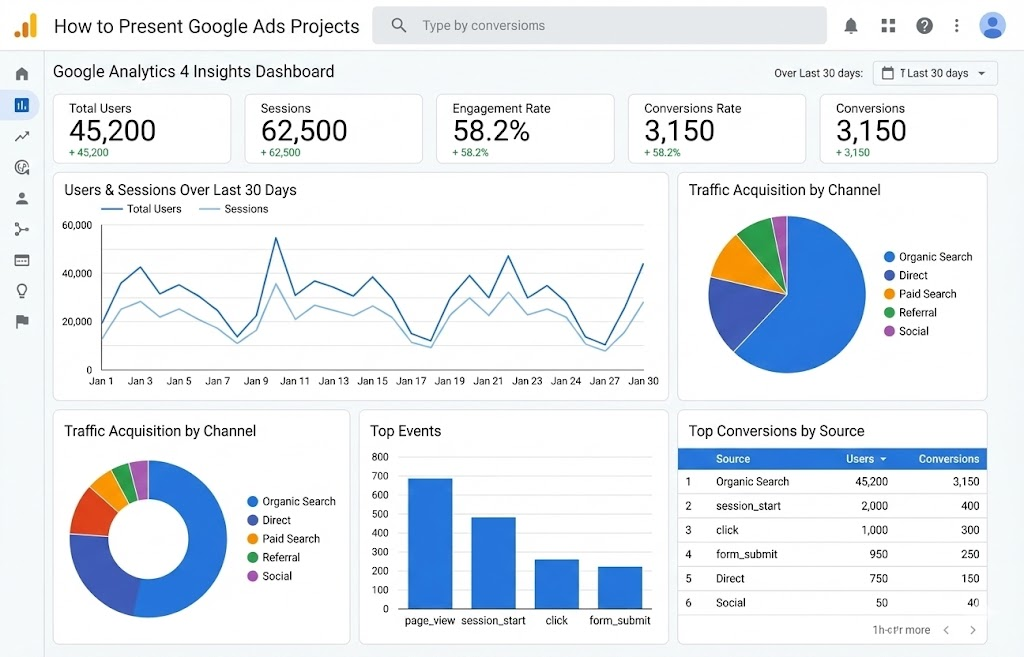
3. How to Present Google Ads Projects
When presenting PPC projects:
Include:
- Objective selection
- Campaign structure
- Keyword grouping
- Ad copy variations
- Negative keyword logic
- Budget allocation
- Landing page alignment
- Performance screenshots
Recruiters want to see your approach, not your budget size. Even small campaigns can be showcased professionally.
For learning Google Ads thinking, see How to Improve Marketing ROI. Apply those insights to increase credibility in your case studies.
4. How to Present Meta Ads Projects
Meta Ads require clarity in audience targeting and creative logic.
Include:
- Audience segmentation
- Creative variations
- Ad copy hooks
- Campaign learning phases
- Breakdown of performance metrics
Meta Ads case studies impress employers when you show your creative reasoning and targeting clarity.
5. How to Present Email Marketing Projects
Email projects demonstrate your funnel-building thinking.
Include:
- Welcome sequence
- Nurture sequence
- Lead magnet structure
- Automation triggers
- Open and click rate screenshots
- Segmentation logic
Email marketing shows your understanding of retention, which is rare among beginners and gives you a strong competitive edge.
While presenting your ads projects, you can use insights from Meta’s Andromeda Update to show your awareness of platform changes. Recruiters appreciate candidates who stay updated with industry shifts.
Tools to Build a Digital Marketing Portfolio (Free and Paid)
Choosing the right tools can drastically improve the quality of your digital marketing portfolio.
Tools help you create better visuals, run sample campaigns, audit websites, design layouts, analyze data, and present results professionally. When beginners skip tools, their work often looks basic.
But when they integrate tools strategically, their portfolio immediately feels advanced and job-ready.
Below is a curated list of the most effective free and paid tools recommended for freshers, job seekers, freelancers, and those switching careers.
1. Tools for Design & Visuals
Your portfolio must look clean and visually appealing. Design quality creates the first impression.
Free Tools
- Canva Free
- Figma
- VistaCreate
Paid Tools
- Canva Pro
- Adobe Illustrator
- Adobe Photoshop
Canva Pro is especially helpful for beginners because it provides ready-to-use templates for presentations, case studies, and social media posts. You can explore how to access more features using Get Canva Pro for Free. Visual clarity increases your portfolio’s perceived value instantly.
2. Tools for SEO Project Creation
SEO tools help you generate keyword research, audits, competitor insights, and ranking reports for your portfolio.
Free Tools
- Google Search Console
- Google Analytics
- Ubersuggest (free tier)
- Keyword Surfer
- Screaming Frog (free version)
Paid Tools
- SEMrush
- Ahrefs
- MOZ Pro
- Surfer SEO
Even using free tools, beginners can produce strong SEO-based case studies. What matters is how clearly you explain the data. Recruiters admire candidates who understand numbers, even when the project is self-created.
3. Tools for Social Media Project Creation
Social media portfolios require creativity supported by planning and analytics.
Free Tools
- Meta Business Suite
- Instagram Insights
- Trello
- Notion
- Buffer (free tier)
Paid Tools
- SocialPilot
- Hootsuite
- Later
- Brandwatch
Social media analytics help you display engagement reports, audience growth, and content performance. These reports enhance the credibility of your case study.
4. Tools for Running PPC Ads
Paid advertising case studies always impress recruiters because they show practical understanding.
Free Tools
- Google Ads (test mode + low-budget campaigns)
- Meta Ads Manager
- LinkedIn Ads (free to explore)
Paid Tools
- SEMrush PPC tools
- AdEspresso
- Optmyzr
Running campaigns- even at 100–200 INR budget—helps you generate real dashboards. These dashboards strengthen your PPC case studies significantly.
For clarity on which ad platform suits your portfolio, see Google Ads vs Facebook Ads. Use those insights while creating your paid ads projects.
5. Tools for Email Marketing
Email marketing tools help you create sequences, landing pages, and automated workflows.
Free Tools
- Mailchimp
- MailerLite
- HubSpot Free
Paid Tools
- ActiveCampaign
- ConvertKit
- GetResponse
These tools help you present strong funnel-based case studies. Recruiters value email marketing because it shows your understanding of retention and conversions.
6. Tools for Portfolio Website Creation
If you choose to build a digital marketing portfolio website, use tools that offer flexibility and SEO support.
Free Tools
- Wix
- Google Sites
- Notion Websites
Paid Tools
- WordPress + Elementor
- Webflow
- Squarespace
A website-based portfolio makes you look more professional and attracts freelance clients organically.
When structuring your portfolio website, use insights from How to Increase Website Traffic to optimize your pages for SEO. This will help your portfolio rank for your name or skills.
How to Create a Digital Marketing Portfolio Website?
A digital marketing portfolio website is the most professional format because it acts as your permanent online identity.
Recruiters can review your work anytime, and clients can evaluate your capabilities without needing PDFs. A website also enhances your personal brand and helps you appear in Google searches.
Below is a detailed guide on creating a high-impact portfolio website, even if you’re a complete beginner.
Step 1: Choose the Right Platform
For beginners, Wix or WordPress are ideal. WordPress provides more flexibility, SEO control, and scalability. Wix, however, is easier for non-technical users.
If you want a hybrid approach, Webflow offers advanced animations, but it’s better for intermediate users.
Step 2: Select a Clean, Minimal Template
Avoid themes that are flashy or overloaded. Your work should be the focus.
Choose templates built for:
- Creators
- Consultants
- Marketers
- Personal brands
- Portfolios
Minimal designs increase readability, which helps both users and AI scanners understand your content.
Step 3: Add the Essential Website Pages
Every digital marketing portfolio website must include:
1. Home Page
A short, impactful introduction with:
- Who you are
- What you do
- What value you bring
- CTA (Download Resume / View Work)
2. About Page
Tell your story. Keep it professional. Share:
- Your journey
- Your strengths
- Why you chose digital marketing
- Your future direction
3. Portfolio Page
This is the core of your website. Add case studies with visuals and structured storytelling.
4. Services Page (optional but powerful)
If you’re a freelancer, include:
- What you offer
- Your process
- Testimonials
- Pricing range (optional)
5. Contact Page
Add:
- Social links
- Contact form
Make it easy for recruiters to reach you.
Step 4: Write SEO-Optimized Content
Optimizing your site helps you rank for:
- Your name
- “Your name + digital marketing”
- “Digital marketing portfolio”
- “Digital marketer + city”
SEO ensures clients and companies can find your work organically.
To improve your website ranking, explore Local SEO Expert Techniques. Apply those strategies to your portfolio site if you want local clients.
Step 5: Add Visuals, Dashboards, and Screenshots
Your website should include:
- Campaign dashboards
- Content samples
- Landing pages
- Reports
- Reels or graphics
- Mock brand visuals
Visual proof increases trust instantly.
Step 6: Make the Website Mobile-Optimized
Most recruiters check portfolios from mobile devices. A non-responsive website decreases your credibility.
Step 7: Integrate Tracking
Install:
- Google Analytics
- Search Console
- Meta Pixel (optional)
This helps you understand how recruiters interact with your site.
Common Mistakes to Avoid When Creating a Digital Marketing Portfolio
A digital marketing portfolio can set you apart, but only if it’s created correctly. Many beginners unknowingly make mistakes that weaken their credibility.
These mistakes confuse recruiters or make the portfolio look rushed and unprofessional.
Below are the most common mistakes I see while reviewing thousands of student portfolios at AADME. Avoiding these gives you a huge competitive advantage.
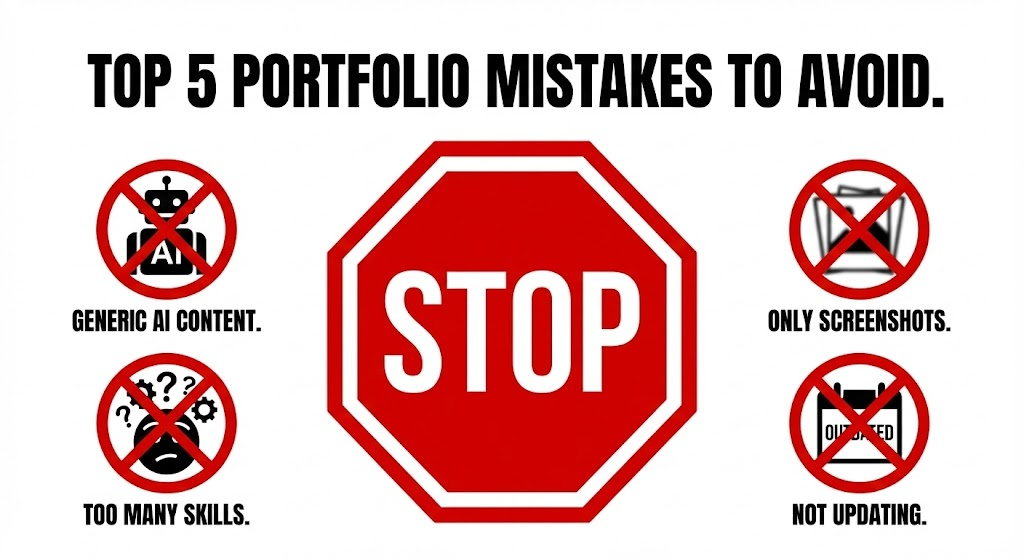
1. Adding Too Many Skills
You don’t need to show everything. When you claim 10+ skills without depth, recruiters assume you lack focus. Specialization increases trust. Your portfolio must highlight a clear direction.
2. Showing Only Screenshots Without Explanation
Screenshots alone don’t tell a story. Recruiters need context. They want to understand:
- Why you did something
- How you approached the problem
- What insights you gained
Always include clear explanations and structured reasoning.
3. Using Generic AI-Generated Content
AI is a tool, not a replacement for your thinking. When recruiters see generic AI outputs, they lose trust immediately. Use AI to support your logic, not replace it.
4. Copying Other Portfolios
Copy-paste portfolios are easy to spot. They fail instantly. Recruiters value authenticity. Even if you are a complete beginner, original projects show initiative and dedication.
5. Overloading with Decorations
Too many colors, animations, or creative elements make your portfolio distracting. Keep design minimal. Let your work take the spotlight.
6. Not Adding Metrics
Metrics speak louder than words. Even basic metrics like CTR, impressions, rankings, or engagement rates increase confidence in your work. Numbers show professionalism.
7. Not Updating the Portfolio Regularly
The digital marketing industry evolves fast. When your portfolio looks outdated, recruiters assume your skills are outdated too. Refresh your case studies every few months.
8. Not Linking to Real Work
Whenever possible, add direct links to:
- Social media posts
- Landing pages
- Websites you created
- Live campaigns (if available)
This boosts credibility instantly.
Frameworks, Templates and Tools for Creating a Digital Marketing Portfolio
A portfolio becomes powerful when it follows a clear framework. Without structure, even good work looks average. Recruiters judge clarity, thought process, and execution ability.
That’s why frameworks matter, they give your portfolio a predictable, professional flow.
Below are the exact industry-standard frameworks I teach students at AADME and use with clients worldwide. These frameworks immediately make your portfolio look expert-level, even if you’re a fresher.
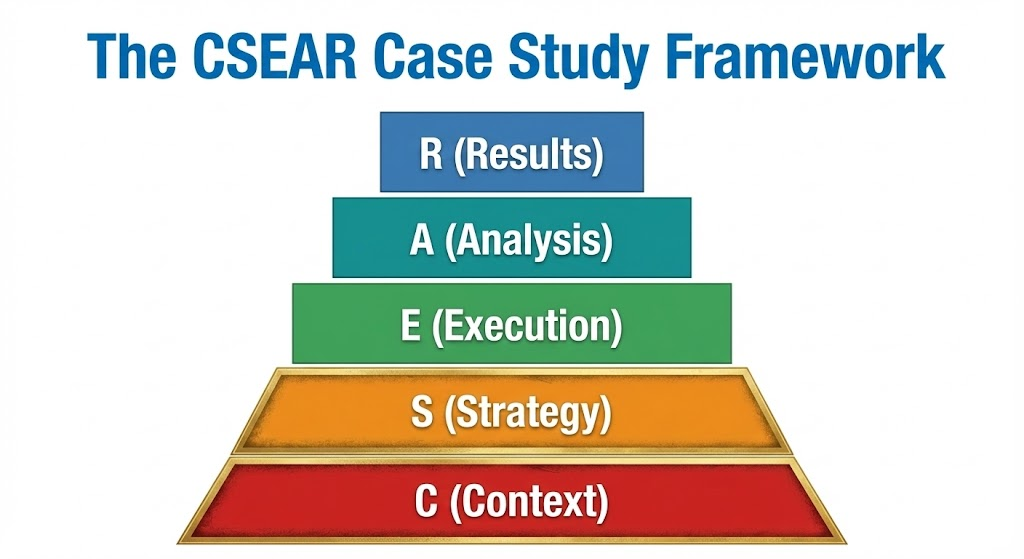
1. The CSEAR Framework (Ultimate Case Study Framework)
Use this for every project you include in your portfolio.
C – Context
Explain what the project was about. Give a short background.
S – Strategy
Show how you planned the campaign.
E – Execution
Break down the steps you implemented.
A – Analysis
Present the data, insights, dashboards, and metrics.
R – Results
Highlight what improved.
Even for mock projects, write results as simulated outcomes.
Why This Works:
This framework shows your analytical thinking. Recruiters instantly understand your approach and decision-making style.
2. The 3P Social Media Framework
Use this for presenting social media campaigns.
P1 – Purpose
Why did you launch the campaign? What was the brand goal?
P2 – Planning
Content calendar, tone, design direction, audience persona.
P3 – Performance
Engagement, reach, saves, CTR, comments, and insights.
This framework works beautifully for beginners because it fits sample projects and practice campaigns too.
3. The TRAF Framework for SEO Projects
SEO portfolios must show clarity. The TRAF model helps you present SEO work professionally.
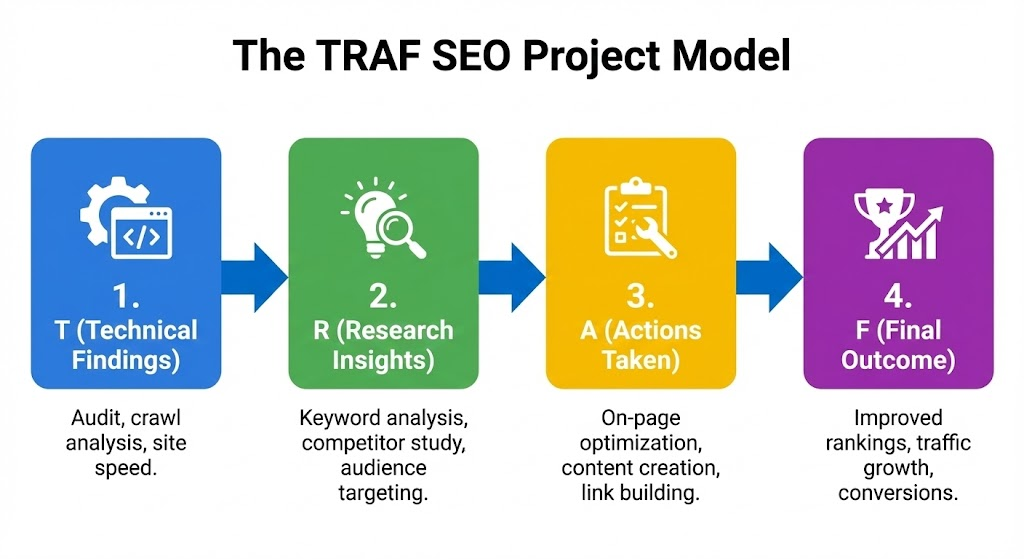
T – Technical Findings
Errors, speed, indexing, mobile performance.
R – Research Insights
Keywords, competitor findings, search intent.
A – Actions Taken
Optimizations, content updates, schema, on-page work.
F – Final Outcome
Ranking changes, traffic improvements, visibility metrics.
If you want deeper SEO understanding, refer to How You Can Increase Your Organic Search Ranking. Use those techniques inside your case studies to impress recruiters.
4. AIDA Copy Framework for Ads & Content
Use AIDA to craft ad copies, landing pages, and social posts you include in your portfolio.
- A – Attention
- I – Interest
- D – Desire
- A – Action
Showing AIDA-based samples in your portfolio demonstrates your understanding of persuasion.
5. The FTB Ads Framework (Used by Agencies)
Every ads project should follow FTB:
- F – Funnel Stage (awareness / consideration / conversion)
- T – Targeting Logic (audience, interest, custom groups)
- B – Budget Strategy (daily spend, distribution, bid type)
When you explain campaigns using FTB, recruiters instantly see agency-style thinking.
Templates for Digital Marketing Portfolio
Below are plug-and-play templates your readers can copy and use immediately.
Template 1: Case Study Page Template
Project Title:
“[Brand Name] Lead Generation Campaign – 30% Lower CPL in 14 Days”
1. Context:
Short background of the brand.
2. Objective:
Clear goal (traffic, leads, sales, awareness).
3. Strategy Overview:
Explain the macro strategy.
4. Execution Steps:
• Step 1
• Step 2
• Step 3
• Step 4
5. Tools Used:
Google Ads, Meta Ads, Canva, Notion, SEMrush.
6. Results:
• Impressions
• CTR
• Leads
• Engagement
• Keyword ranking
7. Learnings:
Key insights from the project.
This template ensures that even a fresher presents work like a professional.
Template 2: Social Media Content Calendar Template
Week 1:
• Post 1 (Reel): Awareness
• Post 2 (Static): Value
• Post 3 (Carousel): Tips
• Post 4 (Story): Engagement
Week 2:
• Post 1: Testimonial
• Post 2: Product highlight
• Post 3: Trending audio
• Post 4: FAQ reel
This shows your planning skills and editorial structure.
Template 3: SEO Audit Template (Short Version)
1. Technical Issues:
• Page speed
• Mobile usability
• Indexing errors
2. On-Page Issues:
• Missing H1
• Thin content
• Keyword misalignment
3. Off-Page Observations:
• Backlink profile
• Competitor insight
4. Recommendations:
• Improve speed
• Write new content
• Fix meta tags
Use this template to create sample SEO audits for your portfolio.
Template 4: Email Marketing Sequence Template
Email 1 — Welcome:
Brand intro + value.
Email 2 — Story:
Explain your journey or the brand’s message.
Email 3 — Education:
Teach something.
Email 4 — Testimonial:
Proof and trust.
Email 5 — Offer:
Present the CTA.
Email sequence case studies instantly elevate your portfolio because they show funnel-thinking capability.
Tools to Make Your Portfolio Creation Faster
These tools help you produce professional projects even if you’re a beginner.
1. Tools for Writing & Research
- ChatGPT
- Jasper
- Notion AI
- Grammarly
- Frase
These tools help you produce clean, grammatically perfect content. They also save time when drafting case studies.
2. Tools for Visualising Data
- Google Data Studio
- Looker Studio
- Canva charts
- Figma UI frames
Using these tools makes your dashboards look clean and interview-ready.
3. Tools for Landing Page Creation
- Systeme.io
- SwipePages
- Elementor
- Unbounce
You can create sample landing pages and add them as screenshots to your portfolio.
To learn how landing pages increase conversions, explore SEO for Coaches (https://aadme.co/blog/seo-for-coaches/).
This guide teaches how to create persuasive landing pages- use the learnings inside your portfolio.
4. Tools for Portfolio Hosting
- WordPress
- Wix
- Webflow
- Notion
- Carrd
All are perfect for showcasing projects visually.
Portfolio Structure Content (Download Model Style)
Below is a complete structure you can use as your portfolio outline.
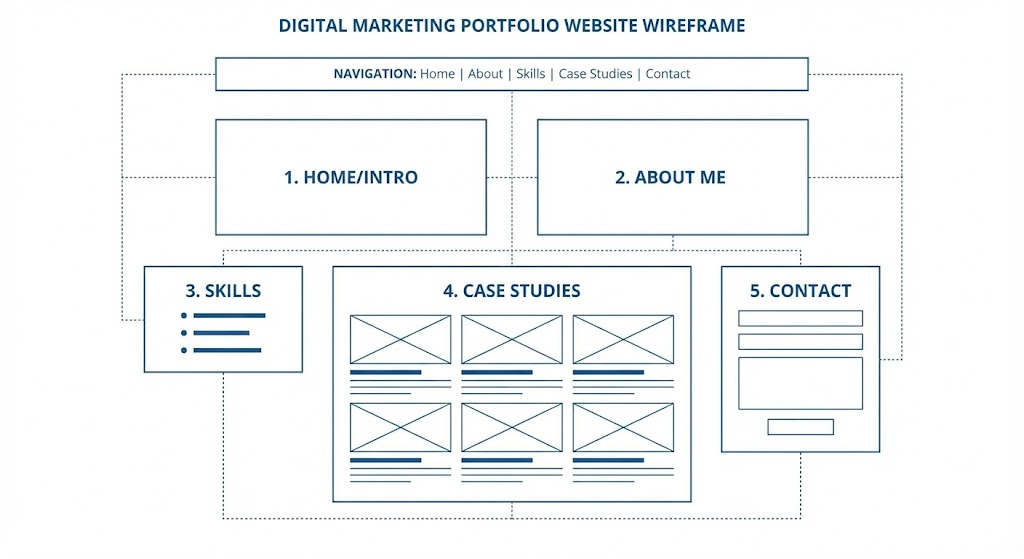
1. Home
Short intro + what you do + call to action.
2. About Me
Your story, strengths, tools, certifications.
3. Skills Overview
SEO, Ads, Social Media, Analytics, Content, Automation.
4. Case Studies
Add 4–6 detailed projects using the CSEAR Framework.
5. Sample Work
- Creatives
- Landing pages
- Keyword reports
- Email sequences
6. Testimonials (if any)
Even 1–2 reviews make a difference.
7. Contact Page
Clear and professional.
Advanced Framework to Impress Recruiters
If you want your portfolio to stand out even more, use these:
1. The “Before–After–Because” Framework
Perfect for writing results-based case study summaries.
- Before: What was happening?
- After: What improved?
- Because: What actions caused the improvement?
This framework shows outcome-thinking, which companies love.
2. The SCOPE Framework for Social Media
- S – Strategy
- C – Content buckets
- O – Optimization
- P – Performance
- E – Experimentation
This structure makes your social media case study look senior-level.
When you create case studies using frameworks, also include skills that companies expect. You can understand these expectations from Digital Marketing Job Roles & Responsibilities. This alignment helps you design a portfolio that matches hiring standards.
Future Trends for Digital Marketing Portfolios
The marketing landscape will change drastically by 2030. Companies will prefer marketers who can combine creativity, analytics, and AI-driven execution.
Portfolios will shift from simple screenshots to dynamic, data-backed systems.
Below are the future trends your readers must understand.
1. AI-Generated & AI-Enhanced Projects Will Become Standard
AI won’t replace marketers, but marketers using AI will outperform others.
Recruiters will expect portfolios to demonstrate:
- AI workflows
- Automated content pipelines
- AI-assisted campaign setups
- AI-based analytics summaries
- ChatGPT or Gemini prompt templates
Portfolios that include AI tools + human strategy will stand out.
If you want to understand how AI adds value in digital marketing, explore AI Tools for Digital Marketing.
Use these insights to create AI-enhanced case studies.
2. Recruiters Will Prioritize “Outcome Thinking” Over Skills Lists
Companies will hire based on your process and outcomes, not the number of tools you know.
That’s why portfolios must show:
- Clear strategy
- Thoughtful execution
- Real numbers
- Learnings
- Insight-driven decisions
Outcome-driven case studies will carry more weight than certifications.
3. Video-Based Portfolios Will Become the New Standard
By 2030, almost 40% of marketers will create video walkthrough portfolios because:
- Video builds trust faster
- It shows communication skills
- It makes your thinking transparent
- It proves presentation ability
Short 60–120 second case study videos will become the norm.
You can embed them throughout your portfolio website.
4. Real-Time Dashboards Will Replace Static Screenshots
Static screenshots will slowly lose value.
Hiring managers prefer live dashboards from:
- Looker Studio
- Google Analytics 4
- Meta Ads Manager
- SEO rank trackers
These dashboards show transparency and allow real-time verification.
5. Specialization Will Overtake “Do Everything” Profiles
The industry will move toward specialist portfolios.
High-value niches include:
- SEO & Technical SEO
- Performance Marketing
- CRO & Landing Page Optimization
- Content Strategy
- Marketing Automation
- AI Workflow Engineering
Generalist portfolios will still work, but specialists will earn higher salaries and get better interviews.
To choose your specialization, read Digital Marketing Job Roles & Responsibilities.
This helps you align your portfolio with your future career path.
6. Ethical Transparency Will Become a Ranking Factor
After multiple global AI regulations, companies want marketers who present honest, verifiable work.
Your portfolio should clearly mention:
- Real vs. sample projects
- AI-assisted work
- Simulated data vs. real client results
- Tools used
Transparent portfolios will build trust and comply with future hiring standards.
7. Multi-Platform Portfolios Will Become Necessary
Marketers will host portfolios in multiple formats:
- Full website
- LinkedIn Featured section
- Notion document
- Behance creative page
- PDF version
- Video playlist
This multi-format approach helps recruiters scan your work fast.
Future of Digital Marketing Hiring (Predictions 2026–2030)
Here are accurate industry predictions based on hiring data, AI trends, and recruiter surveys.
Prediction 1:
Portfolio-first hiring will become a global standard.
Prediction 2:
AI workflow skills will become mandatory for 80% of digital roles.
Prediction 3:
Hiring cycles will shorten because portfolios make evaluation faster.
Prediction 4:
Skill-based hiring will replace degree-based hiring.
Prediction 5:
Candidates with niche specialization will earn 2.4× higher salaries.
Prediction 6:
Recruiters will use AI to scan portfolios and shortlist candidates.
Prediction 7:
Video portfolios will outperform text-only portfolios by 2030.
Candidates who understand these predictions will dominate the hiring market.
Conclusion
A digital marketing portfolio is your professional identity. It proves your skills, builds your authority, and increases your chances of landing high-quality opportunities.
Whether you’re a fresher, job seeker, intern, freelancer, or aspiring digital marketer, your portfolio determines how companies perceive your value.
If you start today, focus on:
- Creating sample projects
- Using clear frameworks
- Showing your thinking process
- Presenting real dashboards
- Adding videos and visuals
- Using AI responsibly
- Building niche expertise
When you invest in your portfolio, you build long-term career stability.
Instead of only telling recruiters what you know, you show them what you can do. That proof creates confidence.
If you’re still learning the basics, start with Digital Marketing for Beginners. Once you understand the fundamentals, convert your skills into structured case studies.
To explore job expectations, read Digital Marketing Job Roles & Responsibilities. This helps you build a portfolio aligned with recruiter demands.
With the right learning, consistent practice, and a world-class portfolio, you can build a successful digital marketing career in 2026 and beyond.
FAQs
How do I create a digital portfolio?
You can create a digital portfolio by organizing your best work, case studies, skills, certifications, and tools into a structured website or online document. A digital marketing portfolio must show process + results, not only screenshots.
Expert Steps to Create a Digital Portfolio
- Select a platform like Notion, Wix, WordPress, or Webflow.
- Write a short introduction describing your strengths and expertise.
- Add 3–6 detailed case studies using a framework like CSEAR.
- Showcase skills such as SEO, ads, content writing, and analytics.
- Include real dashboards, campaign screenshots, and results.
- Add testimonials, certifications, and a professional contact page.
If you want a strong foundation, learn campaign creation and SEO basics through Digital Marketing for Beginners. This helps you build better sample projects for your portfolio.
How do I start my own portfolio?
You start your portfolio by creating 3 sample projects, even if you have no experience. Recruiters need to see how you think, not just what you’ve done.
Projects Beginners Should Start With
- A full website SEO audit
- A social media content calendar
- A Google Ads or Meta Ads practice campaign
- A landing page design sample
- A blog writing and keyword strategy sample
These projects help position you as job-ready and confident.
To learn the skills needed for such projects, explore How to Learn Digital Marketing in 30 Days. It guides you step-by-step to become portfolio-ready in a month.
Is Canva good for portfolios?
Yes, Canva is excellent for designing portfolio layouts, graphics, case study presentations, and social media samples. Many beginners use Canva to make their portfolio visually appealing.
Why Canva Works Well
- Free templates
- Easy drag-and-drop editing
- Clean visual presentation
- Perfect for creative samples
- Supports portfolio PDFs and website pages
If you want creative samples in your digital marketing portfolio, Canva works beautifully.
Can AI create my portfolio?
AI can help you create your digital marketing portfolio, but it cannot replace your real work. AI tools like ChatGPT and Notion AI help structure your case studies, improve grammar, and format project details.
However, your thinking, strategy, and skill must drive the portfolio.
What AI Can Do
- Optimize writing
- Design layouts
- Generate case study drafts
- Suggest better structure
- Improve clarity
What AI Cannot Do
- Show your real hands-on skills
- Generate ethical fake results
- Replace practical knowledge
To build a future-ready digital marketing career with AI, refer to AI Tools for Digital Marketing. Integrating AI into your portfolio increases your hiring potential.
How to create a digital marketing portfolio template?
You can create a digital marketing portfolio template by following a consistent structure across all your project pages.
A strong template helps you present work professionally, like agencies do.
Portfolio Template Structure
- Project Title
- Context
- Objective
- Strategy
- Execution
- Metrics
- Results
- Learnings
- Tools Used
Use frameworks like CSEAR or AIDA for uniformity.
How to make a digital marketing portfolio with no experience?
This is one of the most common questions students ask me. The answer is simple: Create sample projects, case studies, and practice campaigns.
How Beginners Can Build a Portfolio Without Experience
- Do SEO audits of any website
- Create a mock Facebook Ads campaign
- Make a landing page sample
- Build a content calendar for a brand
- Analyze social media performance of competitors
- Write a sample email sequence
- Redesign a website homepage layout
If you want deeper project ideas, check Digital Marketing for Beginners. Use those topics as inspiration for your sample projects.
How to create digital marketing portfolio examples?
Here’s a real structure you can copy:
Example Structure
- Campaign name: “Instagram Reel Growth Strategy for a Fitness Page”
- Objective: Increase reach and profile visits
- Strategy: Consistent reels, trending audio, niche topics
- Execution: 12 reels in 14 days
- Tools: Canva, Instagram Insights
- Result: Reach increased 4X
- Takeaway: Trending audio performs best
How do I create a digital marketing portfolio as a beginner?
You create a beginner-friendly portfolio by focusing on sample work, not job experience.
Beginner Steps
- Learn fundamentals of SEO, ads, content, analytics.
- Create 4–6 sample projects.
- Use frameworks to present them clearly.
- Host your portfolio on Notion, Wix, or WordPress.
Which platforms offer free templates for digital marketing portfolios?
Here are platforms with great free templates:
- Canva
- Wix
- Notion
- Google Sites
- Carrd
- Figma
These platforms make portfolio-building fast and professional.
What are the essential skills to showcase in a beginner’s digital marketing portfolio?
You should showcase skills like:
- SEO basics
- Social media content
- Advertising fundamentals
- Copywriting
- Email marketing
- Analytics
- Content creation
These skills make you job-ready for 2026.
Can I use online portfolio builders to create a digital marketing portfolio?
Yes, online builders like Wix, Notion, and Carrd are perfect. They have free templates, simple layouts, and fast hosting. Beginners love Notion because it’s clean, minimal, and easy to update.
Where can I find examples of successful digital marketing portfolios for beginners?
You can check:
- Behance
- Dribbble
- Notion community templates
- Portfolio showcase blogs
- Digital marketing institutes’ student portfolios
You can use these as inspiration to create your own version.
What digital marketing certifications should I include in my portfolio?
Include certifications like:
- Google Analytics
- Google Ads
- HubSpot Content Marketing
- Meta Ads Certification
- SEMrush SEO Certification
- HubSpot Email Marketing
Certifications help build trust instantly.
How to add social media campaign projects to a beginner’s digital marketing portfolio?
You should include:
- Strategy
- Content calendar
- Reels posted
- Engagement insights
- Audience research
- Creative samples
- Results (even simulated)
Which tools help track and display digital marketing campaign results in portfolios?
Tools like:
- Google Analytics
- Looker Studio
- Meta Ads Manager
- Google Ads Dashboard
- SEMrush
- Ahrefs
- Canva charts
These tools give your portfolio a professional finish.
Are there companies that provide portfolio review services for digital marketers?
Yes, many institutes and mentors provide portfolio reviews. Future-ready institutes like AADME offer lifetime mentorship + portfolio guidance + paid internships, which helps beginners build strong portfolios for the 2026 job market.
What are the best ways to present SEO projects in a digital marketing portfolio?
Use the TRAF Framework:
- Technical findings
- Research insights
- Actions taken
- Final outcomes
Recruiters love SEO case studies presented with clarity.