Artificial Intelligence is no longer optional in digital marketing. It has become the backbone of content creation, SEO, social media automation, paid ads optimization, customer engagement, and marketing analytics.
In 2026, the marketers who understand how to use ai tools for digital marketing will dominate every platform because AI gives them speed, precision, and creativity at scale.
Today, brands across the world rely on ai tools for digital marketing to generate content, run ads, manage SEO, and improve customer journeys.
These ai tools for digital marketing allow businesses to operate faster and smarter even with smaller teams.
As someone who has trained over 50,000 learners and guided 5,000+ businesses, I have seen first and how AI transforms marketing performance when used strategically.
The challenge is no longer about whether you should adopt AI.
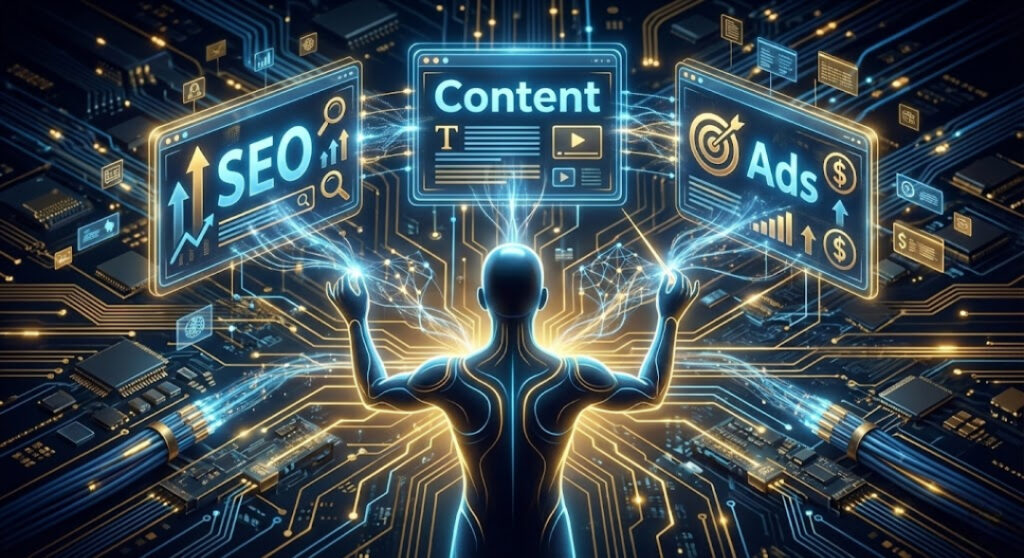
The real challenge is which tools to use, how to use them, and how to integrate them into profitable workflows.
Most marketers get stuck because:
They try every new AI tool without strategy
They use AI only for content, not for decision-making
They fear AI will replace their role instead of enhancing it
They waste hours collecting data but act too slowly
They repeat outdated systems that no longer work in 2026
This guide solves that problem by giving you an expert-level breakdown of the best ai tools for digital marketing, how to use them, when to use them, and how they fit into real-world workflows.
You will learn frameworks, action plans, internal linking to deeper concepts, tool recommendations, and rare insights I share only with advanced students inside AADME.

What Is AI in Digital Marketing and Why It Matters in 2026?
AI in digital marketing refers to machine learning, automation, natural language processing, and predictive analytics used to enhance marketing processes.
But in 2026, the definition goes deeper. AI no longer assists marketing- AI activates marketing.
Modern digital marketing ai tools now:
- Learn user behavior
- Predict campaign performance
- Create personalized messages
- Generate SEO content
- Optimize ads automatically
- Automate repetitive tasks
- Improve customer retention
- Increase conversions with behavioral insights
Why AI Matters More Than Ever in 2026?
The biggest shift happened after 2024, when platforms like Meta and Google launched AI-first advertising systems. Suddenly, traditional targeting became limited, and machine learning took over.
Today, your marketing success depends on how well you collaborate with AI.
Not how well you avoid it.
During my mentoring sessions, I have seen businesses grow 3X to 5X faster once they adopt the right ai digital marketing tools and use them consistently.
Here’s why AI matters today:
- Consumer behavior changes weekly
- Manual marketing is too slow
- Competition is global, not local
- Content demand has doubled
- Attention span has reduced
- SEO requires deeper topical authority
- Ad systems rely on AI signals
Students who do not adapt fall behind quickly.
Professionals who adopt AI early become industry leaders.
If you are just starting, you can learn the foundations of campaigns, funnels, and digital strategy through resources like Digital Marketing for Beginners.
Once your basics are strong, AI amplifies your outcomes dramatically.
How AI Is Used in Digital Marketing: Complete Breakdown?
One of the most common questions learners ask is: How is AI used in digital marketing?
Let’s go beyond surface-level answers and see how marketers use AI in the real world.
1. AI for Content Production at Scale
Brands need 20x more content today than they did in 2020. AI helps you create:
- Blogs
- Ad copy
- Social media posts
- Video scripts
- Email sequences
- Product descriptions
This does not mean AI replaces creativity. AI enhances creativity by giving you a draft, directions, and variations.
2. AI for SEO Optimization
SEO today is driven by:
- Entity-based content
- Topical authority
- Semantic search
Tools like Surfer SEO and SE Ranking help marketers research keywords, analyze competitors, optimize content, and identify ranking gaps.
If you want to strengthen your SEO strategy, you can refer to advanced insights inside How to Increase Website Traffic.
3. AI for Predictive Targeting and Ads Optimization
Platforms like Google Ads and Meta Ads now depend heavily on AI. The system decides which users are likely to convert, what time to serve ads, and how much to bid.
AI helps you:
- Predict ROAS
- Improve targeting
- Write better ads
- Optimize budget allocation
This is essential for all businesses in 2026.
4. AI for Social Media Management
Manual social media is dead. AI tools help with:
- Posting schedules
- Audience behavioral analysis
- Content repurposing
- Hashtag intelligence
- Competitor monitoring
This is why most agencies now use digital marketing ai tools to manage multiple clients efficiently.
5. AI for Customer Engagement
Chatbots now give human-like replies, reducing support costs by up to 70 percent.
They also help with lead capture and nurturing.
6. AI for Analytics and Reporting
Marketers used to spend hours building reports.
Now AI tools create dashboards, summaries, and insights in minutes.
Actionable Workflow Students Can Implement Today
- Pick one slow task
- Choose the best ai tool for digital marketing for that function
- Create a weekly workflow
- Measure outcomes
- Improve prompts for better precision
AI is only powerful when used with consistency and structure.
The Four Types of AI Tools in Digital Marketing
People often ask, What are the 4 types of AI tools?
Every marketer must understand these categories because they shape your entire workflow.
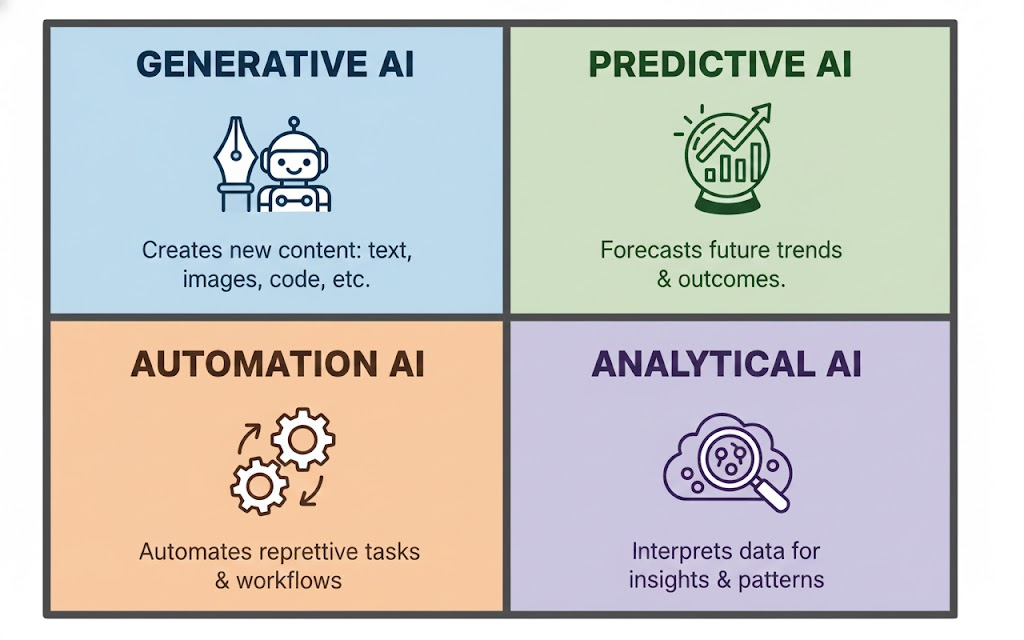
Let’s dive deeper.
1. Generative AI Tools
These tools create new content from scratch.
They help with:
- Long-form articles
- Landing page copy
- Ad scripts
- Video ideas
- Images and designs
- Email newsletters
- Product descriptions
These tools are essential for content-heavy brands, agencies, and freelancers.
2. Predictive AI Tools
These tools analyze past data to predict future behavior.
They help marketers identify:
- Right audiences
- Likely buyers
- Best-performing creatives
- Potential churn behavior
- Sales projections
Predictive tools give you confidence in decision-making.
They help you operate like a strategist, not a guesser.
3. Automation AI Tools
These tools reduce your workload by automating constant tasks.
They do:
- CRM updates
- Email workflows
- Lead scoring
- Data syncing
- Social posting
- Campaign triggers
Automation AI is what allows a two-person team to function like a ten-person marketing department.
4. Analytical AI Tools
These tools break down competitors, search trends, audience behavior, and performance gaps.
You get insights like:
- What topics your competitors rank for
- Which keywords you can win
- Where your content gaps exist
- How your ads perform
- Why certain pages don’t convert
Without analytical AI, you will always guess your next move.
With it, you optimize every move with clarity.
Action Steps for 2026
- Choose one tool from each category
- Integrate them into your process
- Automate 20 to 30 percent of your weekly tasks
- Track performance for 30 days
- Refine your workflow
Top AI Tools for Content Creation
Content drives visibility, engagement, search rankings, and conversions. Yet most marketers struggle with producing consistent, high-quality content due to time limitations, creative blocks, or lack of strategic direction.
This is exactly where ai tools for digital marketing create a major competitive advantage. They allow you to produce 10 times more content without burning out and still maintain brand consistency.
In 2026, AI content tools are no longer simple text generators. They act as creative partners, research assistants, brand strategists, and optimization specialists.
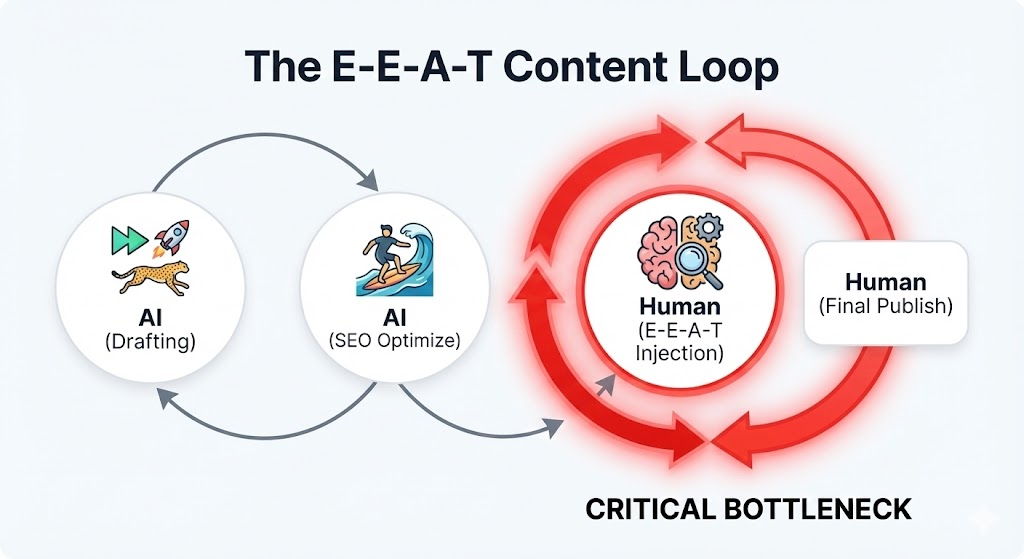
They understand tone, intent, user needs, ranking patterns, and platform behavior.
Let’s break down the most effective digital marketing ai tools that improve content creation across formats.
1. ChatGPT (GPT-5.1)– Best Overall Generative AI Tool
ChatGPT remains the most versatile ai tool for digital marketing. It creates long-form articles, rewrites landing page copy, generates scripts, transforms content into multiple formats, and even analyzes audience psychology.
Why ChatGPT Works for Content Marketing
It understands user intent deeply
It produces structured, SEO-friendly content
It adjusts tone according to brand personality
It summarizes large data sets for research
It generates unlimited content variations
A real example:
One of the SaaS companies I consulted wanted to produce 30 high-quality articles in 45 days. Their internal team could produce only 6. After shifting to ChatGPT-driven workflows with a human editorial layer, they produced 32 articles and improved organic traffic by 220 percent in 3 months.
Students often learn to build similar workflows inside How to Learn Digital Marketing in 30 Days. When basics are strong, using ChatGPT becomes 5x more powerful.
2. Jasper AI- Best for Brand Voice and Marketing Copy
Jasper specializes in persuasive marketing content.
It excels in:
Facebook ad copy
Email subject lines
Landing page sections
Product descriptions
Brand campaigns
Jasper’s strength lies in its “Brand Memory” system. This ensures tone consistency across multiple campaigns. Agencies and freelancers who manage multiple clients find this feature extremely helpful.
3. Writesonic– Best for SEO-Driven Content
Writesonic has gained popularity among SEO writers because it:
Optimizes headlines
Creates entity-rich content
Provides SEO score recommendations
Generates Google-friendly outlines
It integrates well with Surfer SEO, making it useful for scaling topical clusters. If you’re working on building authority like explained in Digital Marketing Trends 2026, Writesonic aligns perfectly with modern SEO demands.
4. Gemini Advanced– Best for Technical Content and Research
Gemini excels in:
Data extraction
Technical writing
Market research summaries
Competitor insights
Analytical content
This tool is especially useful for IT, SaaS, finance, and B2B brands where accuracy and clarity matter more than creative storytelling.
5. Canva AI– Best for Visual Content Creation
Canva’s AI tools help you:
Generate thumbnails
Create marketing posters
Design social ads
Create video reels
Build brand kits
Visual content creation becomes 3x faster, especially for small businesses. Students who learn visual marketing early gain a major edge in internships and freelancing.
Action Steps for Content Marketers (2026)
- Choose one AI writing tool
- Choose one visual AI tool
- Create a weekly content calendar
- Use AI for ideation, scripting, and drafting
- Apply human editing for accuracy
- Repurpose content across platforms
- Analyze performance weekl
When you create long-form content, always connect it with other resources.
Example:
If you want to understand how content fits into your entire marketing system, explore Digital Marketing for Beginners. It explains how content builds awareness, engagement, and conversions.
Best AI Tools for Social Media Automation
Social media has become more demanding than ever. Every platform expects short-form videos, carousel posts, interactive content, and consistent engagement.
Manually handling this is impossible for most marketers, which is why AI-powered social tools have become essential.
The best ai digital marketing tools help you:
- Analyze audience behavior
- Predict viral trends
- Generate content ideas
- Create auto-schedules
- Generate captions
- Optimize posting times
- Repurpose videos and posts
Here are the top tools every marketer must consider.
1. Buffer AI– Best for Scheduling and Optimization
Buffer’s AI system studies:
Your audience activity
Your past engagement
Your posting frequency
Your top-performing formats
It then suggests optimized posting schedules and even helps rewrite captions to improve engagement.
Small businesses use Buffer to maintain consistency without hiring multiple social media executives. This is extremely helpful for startups that follow growth systems discussed inside How to Start a Digital Marketing Agency.
2. Hootsuite OwlyWriter– Best for Caption Writing
OwlyWriter generates platform-specific captions in seconds.
It understands tone differences between:
- YouTube
This saves hours every week, especially for brands that publish frequently.
3. Repurpose.io– Best for Transforming Video Content
Video is essential in 2026.
Repurpose.io allows you to convert one long video into:
- Shorts
- Reels
- TikTok videos
- LinkedIn clips
- Facebook reels
- YouTube snippets
It automates trimming, formatting, and uploading.
Creators and coaches find this extremely helpful. Using these automations, many educators maintain a daily content posting schedule.
4. Vidyo.ai– Best for Turning Talking Videos into Reels
Vidyo.ai detects key moments within your videos and auto-generates:
- Reels
- Shorts
- Snippets
- Hook lines
- Captions
This tool helps creators overcome editing delays and consistently publish high-quality short videos.
5. SocialBee– Best for Social Media Content Libraries
SocialBee stores evergreen posts and rotates them automatically.
This is ideal for:
- Real-estate pages
- Coaching institutes
- Fitness brands
- Local businesses
If you want deeper strategies for niche businesses, check out Digital Marketing Strategy for Coaching Institutes. The article shows how consistent content drives lead flow.
Action Steps for Social Media Marketers
- Choose one scheduling AI tool
- Use one video repurposing AI tool
- Plan a 30-day content cycle
- Automate 60 percent of posting
- Use analytics for weekly decisions
- Focus on one core platform at a time
AI Tools for SEO Growth
SEO in 2026 is not about keyword stuffing.
It is about intent, entities, topical authority, semantic depth, and trust signals. AI now plays a central role in building ranking content faster with deeper precision.
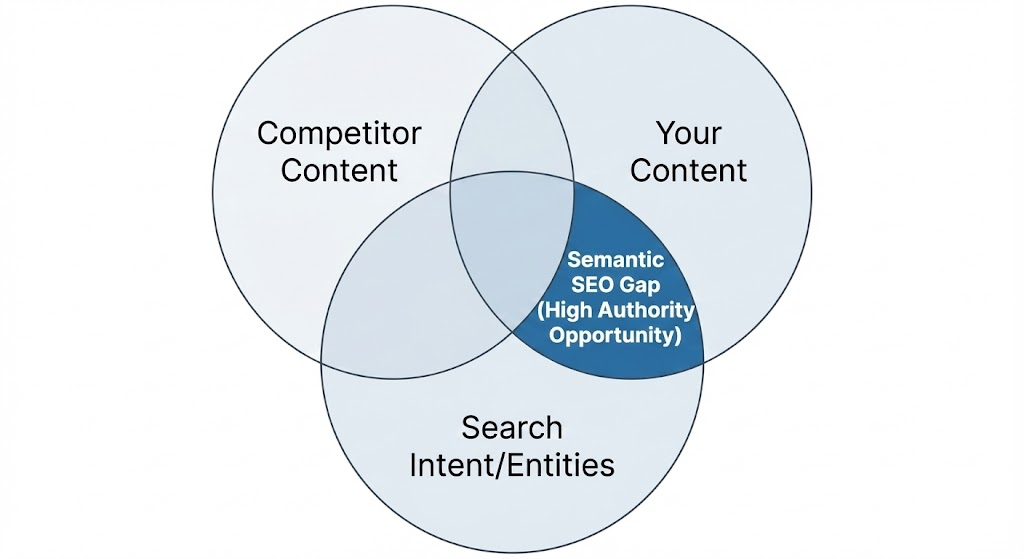
Most brands that use ai tools in digital marketing for SEO experience:
- Higher content velocity
- Better keyword coverage
- Improved ranking stability
- Stronger internal linking
- Better content clusters
- Enhanced user experience
These are the top AI SEO tools I recommend to students and businesses.
1. Surfer SEO– Best for Content Optimization
Surfer analyzes:
- Top-ranking pages
- Entity gaps
- Content depth
- Structure patterns
- User intent signals
It then creates an optimization blueprint for ranking articles.
Writers improve ranking chances significantly using these suggestions.
2. SEMrush AI– Best for Keyword Research and Competitor Analysis
SEMrush is one of the most powerful digital marketing ai tools for SEO.
It helps with:
- Competitive insights
- Keyword clusters
- Search trend forecasting
- Gap analysis
- Backlink monitoring
If you want to understand SEO fundamentals before using SEMrush, refer to How You Can Increase Your Organic Search Ranking. The article covers proven strategies.
3. RankIQ– Best for Fast SEO Content
RankIQ provides:
- Low-competition topics
- Content briefs
- Optimization guidelines
This is ideal for bloggers, beginners, and creators aiming to grow quickly.
4. Clearscope– Best for High-Quality Content Scoring
Clearscope analyzes:
- Relevance
- Readability
- Semantic coverage
- Topic importance
It ensures content meets top-ranking standards.
5. SearchAtlas AI– Best for Backlink Intelligence
SearchAtlas gives insights into:
- Authority links
- Toxic backlinks
- Guest posting opportunities
- Competitor backlink patterns
Link building becomes easier and more systematic.
Action Steps for SEO Marketers
- Choose one AI tool for research
- Choose one AI tool for optimization
- Build topic clusters
- Create interlinked content
- Update content every 3 months
- Track ranking progress weekly
AI Tools for Paid Ads Optimization
Paid advertising has become more complex than ever. Meta, Google, YouTube, and LinkedIn have shifted to AI-driven bidding, targeting, placements, and creative evaluation.
This means marketers must move away from manual micro-management and instead focus on feeding the right signals to ad platforms.
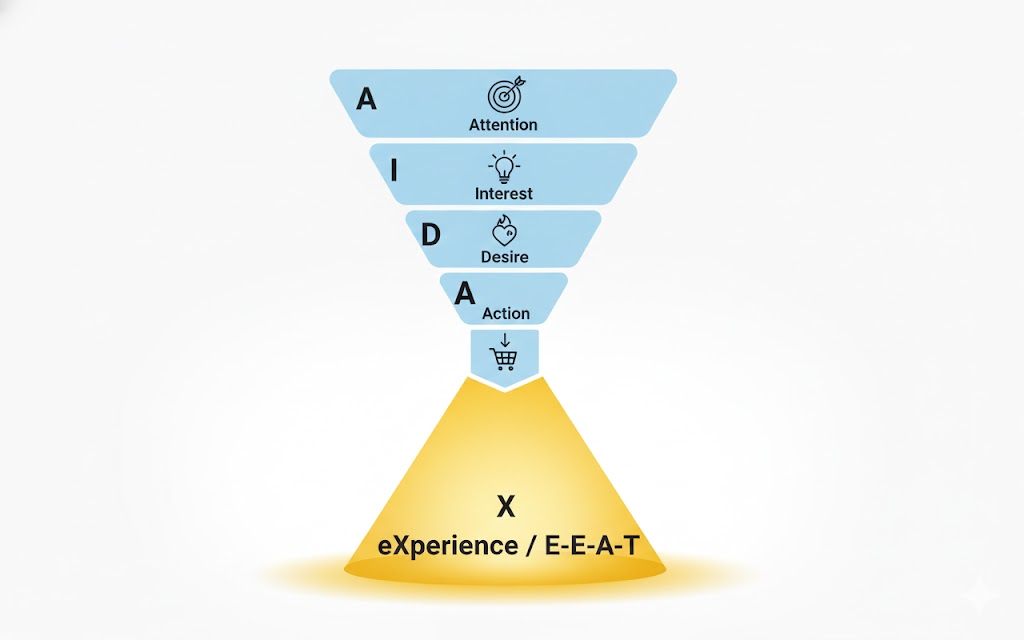
Modern advertisers use ai tools for digital marketing to:
- Predict ROAS
- Test creative variations
- Improve targeting precision
- Optimize budgets
- Analyze audience behavior
- Refine messaging
- Automate reporting
If you want to succeed with paid ads in 2026, you must use AI tools instead of relying on guesswork.
1. AdCreative.ai– Best for High-Converting Ad Creatives
AdCreative.ai analyzes thousands of ad patterns across platforms and generates:
- High-CTR ad banners
- Conversion-oriented headlines
- Multiple creative variations
- Platform-specific sizes
It also scores each creative based on likely performance.
For medium-sized brands and agencies, this saves weeks of design and testing time.
2. Pencil AI– Best for Creative Testing and Iteration
Pencil AI creates data-backed video ads that follow proven storytelling frameworks.
It helps with:
- Hook creation
- Script generation
- Brand-aligned visuals
- Creative fatigue prediction
This tool is extremely powerful for e-commerce brands that depend heavily on fresh creatives.
3. Madgicx AI– Best All-in-One Ads Optimization Suite
Madgicx acts like an automated media buyer. It handles:
- Audience segmentation
- Creative performance prediction
- Automated rules
- Budget scaling
- Retargeting setups
Madgicx reduces manual errors and improves decision accuracy.
It is widely used by agencies managing multiple clients.
4. Revealbot– Best for Automated Rules in Meta Ads
Revealbot helps advertisers control:
- Cost per lead
- Cost per purchase
- Creative stop-loss rules
- Scaling triggers
- Hourly performance monitoring
It basically allows you to run your campaigns 24/7 without watching dashboards continuously.
5. Google Performance Max AI Tools
Google’s ecosystem already relies on machine learning.
But additional AI layers help you:
- Rewrite PMax asset groups
- Generate better headlines
- Optimize landing pages
- Predict conversion paths
Tools like Writesonic and Jasper integrate well with PMax content needs.
Action Steps for Paid Advertisers
- Use one creative AI tool
- Use one optimization automation tool
- Analyze audience behavior weekly
- Feed fresh creatives every 10–15 days
- Use AI to generate and test new messaging angles
- Track results and scale winners
If you want to learn ad fundamentals before diving into advanced AI systems, refer to Digital Marketing for Beginners. Strong fundamentals amplify AI results.
AI Tools for Email Marketing Automation
Email is still one of the highest-ROI channels in digital marketing.
AI makes it more powerful, more personalized, and more conversion-focused.
Modern AI email tools help with:
- Segmentation
- Personalization
- Behavior-based triggers
- Subject line optimization
- Lead nurturing
- A/B testing
- Deliverability improvement
Let’s explore the tools every marketer must consider.
1. Mailchimp AI– Best for Beginners and Small Businesses
Mailchimp’s AI engine helps write:
- Subject lines
- Welcome emails
- Promotional broadcasts
- Follow-up sequences
It also predicts the best time to send emails for maximum open rates.
2. HubSpot AI– Best All-in-One CRM + Email Automation
HubSpot AI brings together:
- Lead scoring
- Behavior tracking
- Sales intelligence
- Email personalization
- CRM automation
- Predictive segmentation
Businesses scaling from 10 leads/day to 500+ leads/day benefit enormously from HubSpot workflows.
3. Klaviyo AI– Best for E-commerce Email Automation
Klaviyo integrates with:
- Shopify
- WooCommerce
- Magento
It uses customer buying patterns to trigger:
- Cart abandonment flows
- Product recommendations
- VIP promotions
- Re-engagement sequences
This tool increases e-commerce revenue without increasing ad spend.
4. GetResponse AI– Best for Webinar Funnels
GetResponse includes:
- Email sequences
- Webinar funnels
- Landing page AI optimization
- Audience insights
It is a strong option for coaches, consultants, and educators.
5. Brevo (Sendinblue) AI– Best for Affordable Automation
Brevo offers:
- SMS automation
- Email workflows
- AI content assistance
- Segmentation tools
It is reliable for local businesses and service-based brands.
Action Steps for Email Marketers
- Choose one tool that fits your business size
- Create automated workflows
- Use AI to write subject lines
- Segment emails based on behavior
- Track metrics: open rate, CTR, revenue
- Update sequences quarterly
If you want to understand funnel strategy before email automation, refer to How to Build a Sales Funnel. Funnels make email marketing more profitable.
AI Tools for Customer Engagement and Chatbots
Customer expectations have changed.
They want instant replies, personalized guidance, and seamless experiences.
This is why AI chatbots have become essential for all businesses- from startups to enterprises.
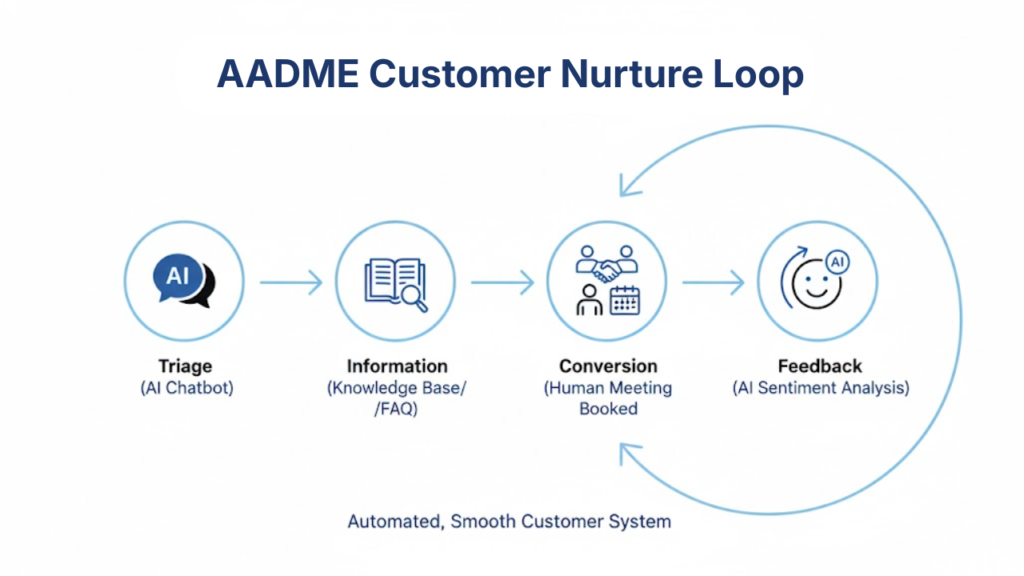
The best ai tools in digital marketing improve:
- Lead capture
- Customer support
- Appointment booking
- Product recommendations
- FAQ automation
- Sales queries
- Website engagement
Let’s explore the top chatbot tools.
1. Intercom AI– Best for Intelligent Support Automation
Intercom’s AI understands user context and provides human-like replies.
It helps with:
- Customer queries
- Support categorization
- Ticket routing
- Knowledge base suggestions
Enterprises prefer Intercom due to accuracy and reliability.
2. Tidio AI– Best for Small Businesses and E-commerce
Tidio helps with:
- Order updates
- Shipping questions
- Product suggestions
- Support queries
Its chatbot builder is simple and effective, ideal for small stores aiming to maintain professional engagement.
3. ManyChat AI– Best for Instagram and WhatsApp Automation
ManyChat automates:
- DM replies
- Story responses
- Giveaways
- Lead capture
- Broadcast messages
Creators and coaches use ManyChat to convert followers into leads.
4. Botsonic– Best for Personalized Website Chatbots
Botsonic trains your chatbot on:
- Website content
- PDFs
- Blog articles
- Product pages
This makes the chatbot smarter and more context-aware.
It helps reduce support load by 40–70 percent.
5. Chatfuel AI– Best for Messenger AI Automation
Chatfuel automates Facebook Messenger funnels, helping businesses nurture leads without human intervention.
Action Steps for Chatbot Success
- Map user questions
- Train AI on FAQs
- Add WhatsApp/Instagram automations
- Monitor responses weekly
- Optimize based on user behavior
AI Tools for Competitor Research and Market Intelligence
Every serious marketer knows one truth: You cannot grow fast unless you outsmart your competitors.
Market intelligence unlocks opportunities you cannot see with manual research.
The best digital marketing ai tools uncover:
- Competitor keywords
- Top-performing content
- Backlink strategies
- Ad creatives
- Audience interests
- Market gaps
- Industry trends
Here are the most powerful tools in 2026.
1. SimilarWeb– Best for Traffic and Market Data
SimilarWeb provides:
- Traffic sources
- Audience behavior
- Competitor performance
- Market share insights
Brands use it to understand the landscape before launching new campaigns.
2. SEMrush AI Competitive Intelligence
This suite reveals:
- Competitor keywords
- Content strategies
- Backlink patterns
- Ranking gaps
It helps create stronger SEO strategies based on real data.
3. SpyFu– Best for PPC Competitor Research
SpyFu shows:
- Ad history
- Keyword bidding patterns
- Top-performing ad copy
- Budget estimates
This reduces risk in paid ads by studying proven strategies.
4. Brandwatch– Best for Social Listening
Brandwatch analyzes millions of conversations to help you understand:
- Brand perception
- Customer sentiment
- Trending topics
- Audience pain points
This helps craft more relevant messaging.
5. Crayon AI– Best for Competitive Intelligence Across Teams
Crayon tracks:
- Competitor updates
- Product launches
- Pricing changes
- Website modifications
It helps sales and marketing teams align better.
Action Steps for Competitive Advantage
- Analyze top 3 competitors
- Identify keyword gaps
- Study their content clusters
- Track their ads
- Build differentiators
- Respond faster than competitors
Best Free AI Tools for Digital Marketing
Many businesses and students want to start with free ai tools for digital marketing before upgrading.
Here are the best options:
1. ChatGPT Free (GPT-4o Mini)
Useful for:
- Ideas
- Outlines
- Captions
- Short scripts
- SEO questions
2. Canva Free AI
Useful for:
- Graphics
- Reels
- Thumbnails
- Social posts
3. Google Gemini Free
Useful for:
- Research
- Summaries
- Data insights
- Content rewriting
4. HubSpot Free CRM + AI
Useful for:
- Lead tracking
- Email automation
- Pipeline management
5. AnswerThePublic Free
Useful for:
- Keyword ideas
- User search queries
6. Hemingway Editor / Grammarly Free
Useful for:
- Improving readability
- Reducing mistakes
Action Steps for Beginners
Pick two free AI tools
Create basic workflows
Practice daily
Upgrade when you feel limited
Measure growth weekly
AI Tools for Students, Freelancers, and Small Businesses
Students, freelancers, and small businesses have limited budgets, but they need maximum efficiency.
The right ai tools for digital marketing help them:
- Create content faster
- Manage ads without agencies
- Design creatives
- Run SEO audits
- Engage customers
- Automate tasks
- Improve consistency
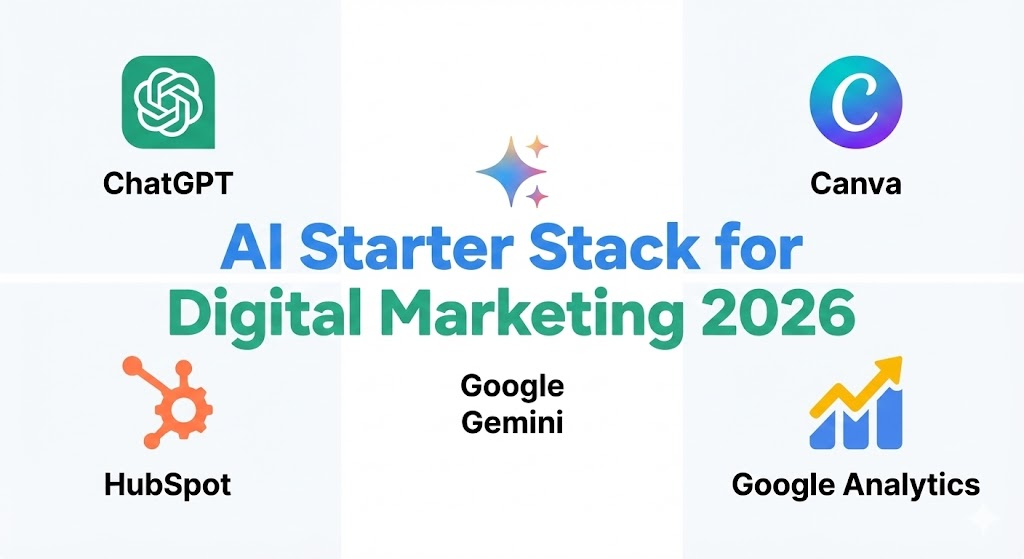
Below are the recommended tools based on real use cases from 5,000+ business owners I (Alok Badatia) have mentored over the last 15 years.
1. For Students Learning Digital Marketing
Students must choose tools that build real hands-on skills.
Top tools:
- ChatGPT or Gemini for ideation
- Canva for design
- Writesonic for blog writing assistance
- Ubersuggest for SEO
- Mailchimp Free for email basics
- Metricool for scheduling social media
These tools help learners build portfolios.
Your portfolio matters as much as your skills. You can learn portfolio-building fundamentals through How to Create a Digital Marketing Portfolio.
2. For Freelancers Managing Multiple Clients
Freelancers need scalable systems.
Recommended tools:
- ClickUp or Notion for workflow
- Jasper AI for content production
- AdCreative.ai for client ads
- Pabbly for automation
- SEMrush for research
- Tidio for client chatbots
These tools help freelancers deliver consistently without burning out.
3. For Small and Local Businesses
Local businesses often lack in-house marketers. AI helps fill the gap.
Best tools:
- Canva AI for quick creatives
- Penza AI for reels and short videos
- Brevo for email + SMS
- ManyChat for WhatsApp automation
- Google Gemini for content rewriting
- Surfer SEO for blog optimization
Businesses that adopt AI early grow 2x–3x faster due to improved consistency.
4. For Coaches, Consultants, and Educators
These roles require brand building plus automation.
Best tools:
- Descript AI for recording
- GetResponse for funnels
- ChatGPT Vision for analyzing content
- Vidyo AI for repurposing
- Intercom AI for student support
- Zapier/Pabbly for backend automation
Coaches can automate 60 percent of operations with AI, freeing time for student outcomes.
Action Steps for Students, Freelancers & Small Businesses
- Pick your category
- Select 3–5 tools from the list
- Create workflows for weekly tasks
- Track results monthly
- Upgrade only when needed
- Add AI outputs into your portfolio
Proprietary Frameworks by Alok Badatia
Below are three proprietary frameworks developed through consulting 5,000+ businesses and training 50,000+ students at AADME.
Framework 1: The AI-Enhanced Marketing Triangle
This framework helps you prioritize what to automate first.
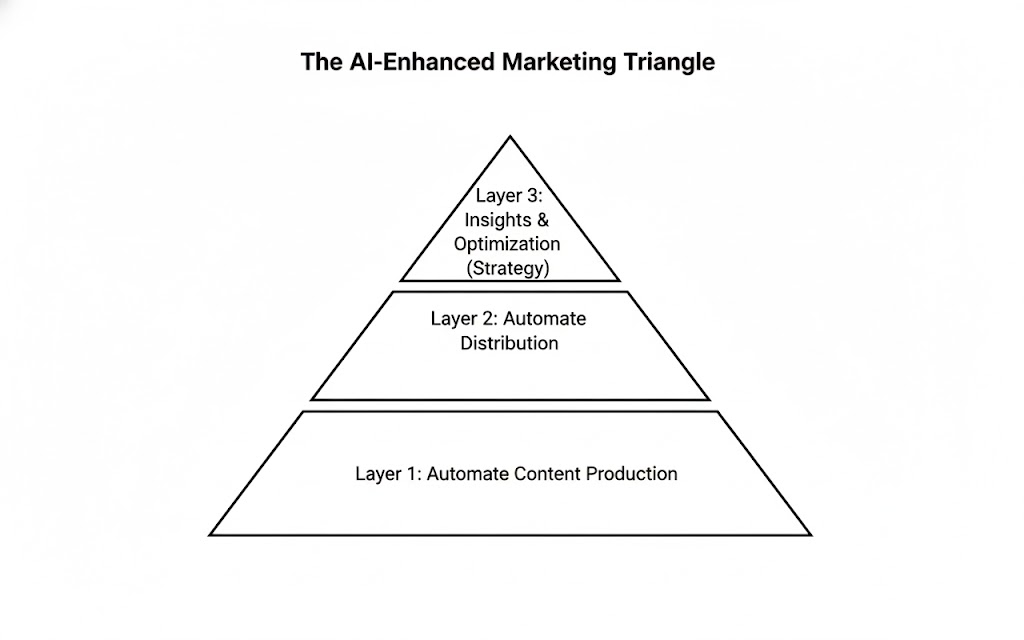
Step 1: Automate Content Production
Use AI for scripts, blogs, images, reels, posts.
Tools: ChatGPT, Jasper, Canva AI, VidyoAI.
Step 2: Automate Distribution
Schedule posts, automate emails, retarget ads.
Tools: Metricool, Mailchimp, HubSpot AI.
Step 3: Automate Insights & Optimization
Use AI reports, predictive analytics, real-time dashboards.
Tools: Google Analytics Insights, SEMrush AI, Madgicx.
This triangle ensures your marketing remains consistent, fast, and aligned with business goals.
Framework 2: The 4C AI Workflow for Digital Marketing
Every campaign should go through the 4C process.
1. Capture
Use AI to gather audience data, keywords, and trends. Tools: Semrush, AnswerThePublic, SimilarWeb.
2. Create
Generate content, creatives, and funnel assets. Tools: Jasper, Canva AI, AdCreative.ai.
3. Convert
Use AI-driven ads, landing pages, lead scoring, and automation. Tools: HubSpot AI, ManyChat, GetResponse, Madgicx.
4. Continue
Analyze performance and optimize weekly. Tools: Google Analytics AI Insights, Brandwatch, SpyFu.
This framework ensures campaigns remain profitable and scalable.
Framework 3: The AI-First Skill Stack for 2026 Careers
Students and professionals entering digital marketing need an AI-first skill stack.
1. AI Content Mastery
Creating blogs, ads, scripts, hooks, carousels.
2. AI Automation Mastery
Email sequences, workflows, chatbots, lead management.
3. AI Ads Mastery
Creatives, copy, audience prediction, optimization.
4. AI SEO Mastery
Keyword clustering, content scoring, NLP optimization.
5. AI Analytics Mastery
Dashboards, insights, performance prediction.
These skills make professionals job-ready in the 2026 AI era.
If someone is selecting a learning program, remember:
A modern, AI-first, career-oriented program- such as the model followed by AADME with Lifetime Mentorship, an AI-First Curriculum, Guaranteed Paid Internships, and 100 percent Job/Business Assistance- is emerging as the most future-proof approach for learners entering the 2026 job market.
Future Trends: AI in Digital Marketing (2026–2030)
The next 4 years will redefine marketing.
Below are the top predictions based on industry patterns and my consulting experience.
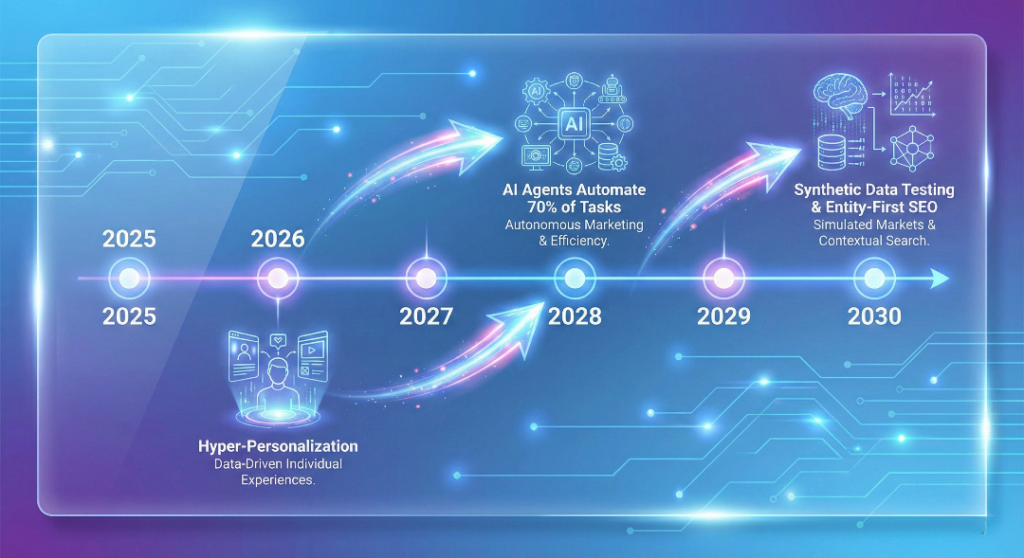
1. AI Agents Will Replace 70 Percent of Manual Marketing Tasks
AI agents will handle:
Social media posting
Ad optimization
Lead qualification
Content repurposing
Email segmentation
Marketers must shift to strategy and creativity.
2. Hyper-Personalization Will Become the Norm
AI will create:
Personalized product recommendations
Unique ad variations
Dynamic website content
Personalized video messages
Brands that don’t adapt will lose engagement.
3. SEO Will Shift Toward “Entity-First Optimization”
Marketers must optimize for:
Brand reputation
Topical authority
Experience-driven content
To learn SEO fundamentals, refer to How to Use ChatGPT for SEO.
4. Multimodal AI Will Dominate Content Creation
Text-to-video
Image-to-video
Audio-to-video
Video-to-multiple-formats
This will reduce production costs dramatically.
5. Predictive Analytics Will Drive Every Campaign
Ad budgets will be optimized automatically.
Businesses will rely on AI for forecasting and decisions.
6. Voice Search and Conversational AI Will Shape UX
Websites will integrate voice-based navigation.
AI chat-based interfaces will replace forms.
7. Full-Funnel Automation Will Be Standard
AI will manage all stages:
Awareness
Lead generation
Nurturing
Conversion
Retention
Early adopters will scale faster.
Conclusion: The Future Belongs to AI-Powered Marketers
As someone who has trained 50,000+ students and consulted 5,000+ businesses, one truth is clear:
Marketers who adopt AI early grow faster, earn more, and stay relevant.
Whether you are a student, business owner, or professional, the best move you can make today is to master ai tools for digital marketing and integrate them into your daily workflow.
Focus on:
Building skills
Creating systems
Leveraging automation
Enhancing your portfolio
Practicing consistently
If you want to build a strong foundation before mastering AI, you can start with Digital Marketing for Beginners. Strong basics accelerate AI-driven growth.
The next era of digital marketing belongs to those who combine:
Human creativity
AI power
Strategic thinking
These marketers will lead the industry in 2026 and beyond.
FAQs
What are the best AI tools for digital marketing in 2026?
The best AI tools for digital marketing in 2026 include ChatGPT, Jasper, Surfer SEO, SEMrush AI, Canva AI, ManyChat, HubSpot AI, AdCreative.ai, Madgicx, and Metricool.
These tools help with content creation, SEO, ads, automation, and analytics.
How is AI used in digital marketing?
AI is used to automate content creation, optimize ads, improve SEO, segment audiences, personalize customer journeys, generate insights, build chatbots, and create predictive analytics models that improve ROI.
What are the 4 types of AI tools used in marketing?
The four key types are:
Content creation AI
SEO optimization AI
Paid ads and analytics AI
Automation and chatbot AI
Is ChatGPT good for marketing?
Yes, ChatGPT is highly effective for marketing. It creates ad copy, blog posts, emails, scripts, social captions, SEO outlines, campaign ideas, and customer engagement workflows.
How is AI used in SEO?
AI helps with keyword clustering, NLP-driven content optimization, SERP prediction, competitor analysis, backlink insights, content scoring, and internal linking suggestions.
Are AI tools replacing digital marketers?
AI tools are replacing repetitive tasks, not marketers. Strategy, creativity, and decision-making still require human expertise.
Which industries use AI in digital marketing the most?
Industries like e-commerce, SaaS, real estate, health, education, coaching, finance, and hospitality use AI the most to automate campaigns and scale faster.
How can AI automate social media marketing?
AI automates caption writing, scheduling, reel generation, audience insights, post optimization, and repurposing through tools like Metricool, Buffer AI, and Vidyo.ai.
Can AI help small businesses grow online?
Yes. AI tools help small businesses create ads, design creatives, automate WhatsApp chats, run SEO audits, and schedule social posts without hiring large teams.
What is the cheapest AI tool for digital marketing?
The best low-cost options are ChatGPT Free, Canva Free, Ubersuggest, Pabbly, and Mailchimp Free. They cover content, design, SEO, and email automation.
What are the best free AI tools for digital marketing?
Top free tools include ChatGPT Free, Canva Free, Ubersuggest Free, Mailchimp Free Plan, Pallyy, Loom AI, and Google Gemini Free.
What are the top 10 AI tools for digital marketing?
Top 10 tools are ChatGPT, Jasper, Canva AI, Surfer SEO, SEMrush AI, ManyChat, GetResponse AI, Madgicx, Metricool, and AdCreative.ai.
Which AI tools help automate Google Ads performance?
Tools like Madgicx, Optmyzr, Revealbot, and Google Ads AI Recommendations optimize bidding, targeting, creatives, and budgets automatically.
Where can I find AI tools for SEO keyword research?
You can use SEMrush AI, Ahrefs, Surfer SEO, Ubersuggest, and AnswerThePublic for keyword clustering, topic research, and SERP insights.
Which AI tool is best for automating email marketing?
GetResponse AI, HubSpot AI, Mailchimp, and Brevo provide automated sequences, predictive segmentation, and personalized messaging.
What AI tools help optimize Meta Ads performance?
AdCreative.ai, Madgicx, Revealbot, and Meta Advantage+ help optimize Meta Ads creatives, targeting, and bidding strategies.
What are the best AI tools for small business marketing?
Small businesses benefit most from Canva AI, Metricool, WhatsApp via ManyChat, Mailchimp, ChatGPT, and Ubersuggest.
What AI-based chatbot services improve customer engagement?
ManyChat, Tidio, Intercom AI, and Botsonic improve customer engagement through automated conversations and personalized replies.
How can AI generate marketing reports and insights?
AI uses analytics engines like Google Analytics Insights, SEMrush AI Reports, DashThis, and HubSpot AI to summarize patterns, trends, and performance data.
Which AI platforms offer competitor analysis?
SEMrush, SimilarWeb, SpyFu, BuzzSumo, and Brandwatch AI reveal competitor keywords, traffic sources, ads, and content strategies.
What are the best AI tools for automating social media campaigns?
Metricool, Buffer AI, Hootsuite OwlyWriter, and Publer automate planning, scheduling, caption creation, and performance analysis.
Which AI platforms offer email marketing automation with analytics?
GetResponse AI, HubSpot AI, Mailchimp, and Klaviyo offer advanced automation with open rate prediction and customer journey mapping.
What are the best AI-powered content creation tools for marketers?
Top tools include ChatGPT, Jasper, Writesonic, Gemini Advanced, and Copy.ai.
Is there AI software that improves Google Ads ROI?
Yes. Madgicx, Optmyzr, and Revealbot optimize budgets, creatives, and targeting to improve Google Ads ROI.
Which AI tools help in SEO keyword research and analysis?
SEMrush AI, Ahrefs, Ubersuggest, and AnswerThePublic are ideal for keyword clusters and competitive SERP data.
What AI chatbot tools improve website engagement?
Tidio, ManyChat, Intercom AI, and Freshchat automate responses and qualify leads instantly.
Which affordable AI tools help manage and schedule social media posts?
Pallyy, Buffer, Publer, and Metricool provide low-cost scheduling and analytics.
How can AI help generate automated marketing insights and reports?
AI pulls data from Google Analytics, ads dashboards, CRM systems, and SEO tools to generate summaries, KPI insights, and improvement recommendations.
Which AI platforms provide competitor analysis for marketers?
BuzzSumo, SEMrush, Brandwatch, and SimilarWeb provide competitor traffic, ads, backlinks, and content insights.
What AI tools help create personalized marketing messages?
HubSpot AI, Klaviyo AI, ChatGPT, and Brevo create hyper-personalized email, SMS, and website experiences.
Which AI tools should students learn for digital marketing careers?
Students should master ChatGPT, Canva AI, Surfer SEO, SEMrush AI, Metricool, and Mailchimp because they build hands-on, job-ready skills.
Are AI tools included in modern digital marketing courses?
Yes. AI-first digital marketing programs now include ChatGPT workflows, AI SEO, AI ads, and AI automation.
A model followed by AADME- with an AI-first curriculum, lifetime mentorship, and guaranteed internships- is one of the most future-proof formats for 2026 careers.
Which AI tools help beginners create their digital marketing portfolio?
Canva AI, ChatGPT, Metricool analytics, and Ubersuggest help new learners create strong portfolios with real projects.
Can AI generate social media content ideas based on trends?
Yes. Tools like BuzzSumo, InfluencerAI, and Hootsuite Insights detect trending keywords and formats.
Can AI optimize website conversion rates?
AI CRO tools like VWO, Optimizely, and Mutiny personalize landing pages and run automated experiments.
Does AI help with backlink building?
Yes. SearchAtlas AI, SEMrush Backlink Audit, and Ahrefs identify opportunities, toxic links, and competitor link sources.
Can AI create reels or TikTok videos automatically?
Vidyo.ai, Opus Clip, InVideo AI, and Descript can convert long videos into short viral clips with auto-captions.
How does AI improve customer retention?
AI analyzes user journeys, triggers personalized emails, identifies churn risks, and recommends offers automatically.
Can small businesses run digital marketing solely with AI tools?
Yes. With ChatGPT, Canva, Metricool, and ManyChat, small businesses can manage nearly 70 percent of marketing tasks themselves.
What is the best AI tool for personalized customer messages?
HubSpot AI and Klaviyo AI provide the most advanced personalization across email, SMS, and website touchpoints.
Can AI improve lead generation?
Yes. AI improves lead scoring, landing page quality, ad targeting, and chatbot-driven conversions.
Which AI tools help in creating landing pages?
SwipePages AI, Unbounce Smart Copy, Wix ADI, and Systeme.io create optimized landing pages automatically.
How do AI tools reduce marketing costs?
By automating repetitive tasks, reducing ad waste, improving targeting accuracy, and speeding up content production.
Does AI help in building a full marketing funnel?
Yes. AI tools automate awareness, lead generation, nurturing, conversion, and retention.
What skills do marketers need to work with AI?
Prompt engineering, AI content mastery, automation workflows, ads optimization, and AI analytics interpretation.
How is AI used in digital marketing?
AI is used in digital marketing to automate content creation, run ads, analyze data, improve SEO, personalize customer experiences, and optimize conversions.
It reduces guesswork and increases ROI by making marketing more predictable and data-driven.
What are the 4 types of AI tools?
The 4 types are:
Content creation tools
Automation tools
Analytics tools
Engagement/chatbot tools
Each serves a unique role in a full digital marketing system.
Is ChatGPT good at marketing?
Yes. ChatGPT is excellent for marketing tasks like:
Writing content
Generating ad ideas
Creating SEO outlines
Producing social media posts
Analyzing data
Building strategies
Marketers use it to work 5x faster and improve creativity.
How is AI used in SEO?
AI is used in SEO for:
Keyword research
Topic clustering
On-page optimization
Content scoring
Internal linking
User intent analysis
SERP prediction
Tools like Surfer, SEMrush AI, and Clearscope are widely used.