
How to price yourself as a freelancer is no longer a beginner’s problem. It is a survival skill. Even experienced freelancers struggle because the market has undergone fundamental changes.
AI tools, global platforms, and outcome-driven hiring have completely disrupted traditional freelance pricing models.
Most freelancers still price based on effort. However, clients now pay for impact. Because of this mismatch, freelancers feel overworked and underpaid. Meanwhile, clients feel confused and price-sensitive.
This gap creates frustration on both sides.
In my experience consulting with 5,000+ freelancers and agencies globally, pricing is the single biggest growth bottleneck. Skills matter. Portfolio matters.
However, pricing decides sustainability. Without fixing pricing, scaling is impossible.
The opportunity in 2026 is massive. Businesses want specialists, not task-doers. Freelancers who understand value-based pricing can earn 3–5× more without increasing workload.
That shift starts with mindset and strategy.

How Freelancers Should Think About Pricing (Mindset Reset)
To survive the market shift, freelancers must transition from cost-plus pricing (time spent) to value-based pricing (results delivered). Hourly billing artificially caps your earning potential and often attracts clients looking for the cheapest option rather than the best solution.
By anchoring your fees to business outcomes- such as revenue generated or time saved- you decouple your income from your clock.
Our data suggests that freelancers who successfully make this pivot increase their average deal size by 200% to 300% within 12 months.

Freelancers often confuse effort with value. Clients do not buy hours. They buy solutions. When you charge for time, you sell labor. When you charge for outcomes, you sell leverage. This distinction defines income ceilings.
Most beginners believe hourly pricing feels “safe.” In reality, it is limiting. Hourly pricing rewards inefficiency. Faster freelancers earn less. Slower freelancers earn more.
This model punishes expertise.
In 2026, businesses hire freelancers to reduce risk. They want predictable outcomes. Therefore, pricing must reflect certainty, not struggle.
Freelancers who understand client economics gain pricing power quickly.
This shift mirrors trends across digital careers. You can see the same pattern in digital marketing salaries and consulting roles.
This shift mirrors the trends seen in the Digital Marketing Salary in India, where outcome-driven roles consistently outperform time-based ones.
Common Freelance Pricing Advice That Is Flat-Out Wrong
Most freelance pricing advice online is outdated and harmful. Charging low to gain experience destroys confidence and attracts poor clients. In my experience, underpricing delays growth and traps freelancers in low-value work cycles.
The most damaging advice is “start cheap.” This ‘start cheap’ mentality disproportionately affects female freelancers.
Industry data suggests that women in digital roles often underprice themselves by 15–20% compared to their male counterparts due to negotiation hesitation.
To close this gap, effective pricing must remove gender bias and focus strictly on the ROI delivered to the client.
Another wrong belief is “increase rates only after years of experience.” That logic fails in fast-changing industries. Skills compound faster than time. Results matter more than tenure.
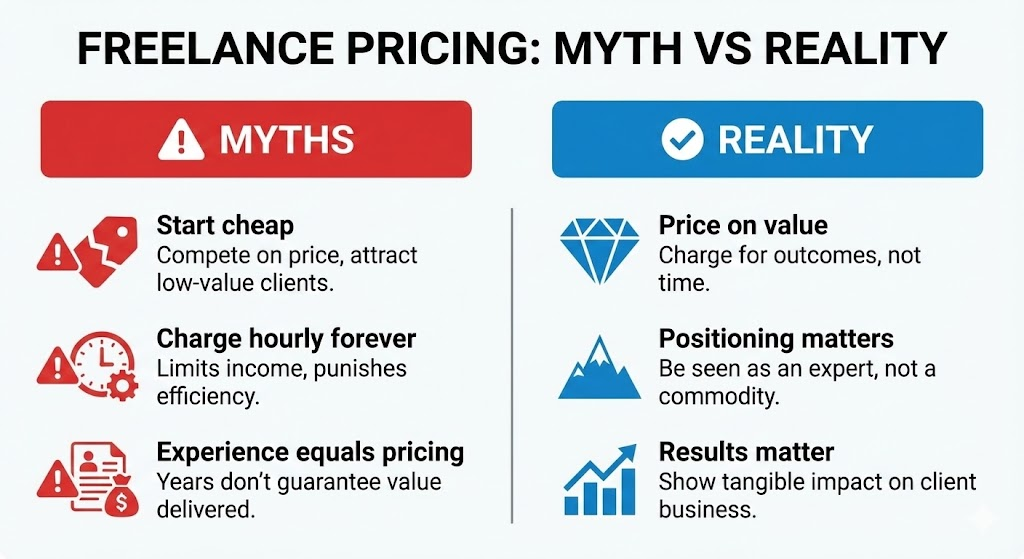
Many freelancers also copy competitor pricing blindly. This approach ignores positioning, niche, and delivery speed. Two freelancers offering “graphic design” deliver entirely different business outcomes.
Most beginners get this wrong by treating pricing as math. Pricing is psychology first. Numbers come later. Authority, clarity, and communication decide price acceptance.
If you are new to the industry, understanding the core scope of What is Freelance Digital Marketing? A Beginner’s Guide is crucial to positioning yourself as a strategic partner rather than just a hired hand.
The 3 Core Freelance Pricing Models (And When to Use Each)
Freelancers use hourly, project-based, or value-based pricing. Hourly suits short tasks. Project pricing fits defined deliverables. Value-based pricing works best for specialists delivering measurable business outcomes and offers the highest earning potential.
1. Hourly Pricing Model
Hourly pricing is simple but restrictive. It works only for short-term execution tasks. It fails for strategic work. Income is capped by available hours.
2. Project-Based Pricing Model
Project pricing offers clarity. Scope is defined. Clients prefer it. However, poor scoping leads to unpaid revisions. Strong boundaries are essential.
3. Value-Based Pricing Model
Value-based pricing links fees to results. This model scales income fastest. It requires confidence, proof, and positioning. However, it creates long-term client relationships.
| Pricing Model | Best For | Income Potential | Risk Level |
| Hourly | Beginners | Low | Medium |
| Project | Intermediate | Medium | Medium |
| Value-Based | Experts | High | Low |
Freelancers aiming for agencies or consulting roles must adopt value-based pricing early. This transition is similar to agency scaling strategies explained in How to Start a Digital Marketing Agency.
How to Set Your Freelance Hourly Rate (Without Guesswork)
Your hourly rate should reflect income goals, expertise, and opportunity cost. Freelancers must calculate rates backward from annual income targets while factoring in unpaid work, taxes, and buffer time.
Start with your desired annual income. Divide it by realistic billable hours. Most freelancers overestimate billable time. Admin work, calls, and revisions consume 40–50% of time.
Next, add a skill premium. Specialized skills command higher rates. Generalists struggle. Market demand matters more than personal comfort.
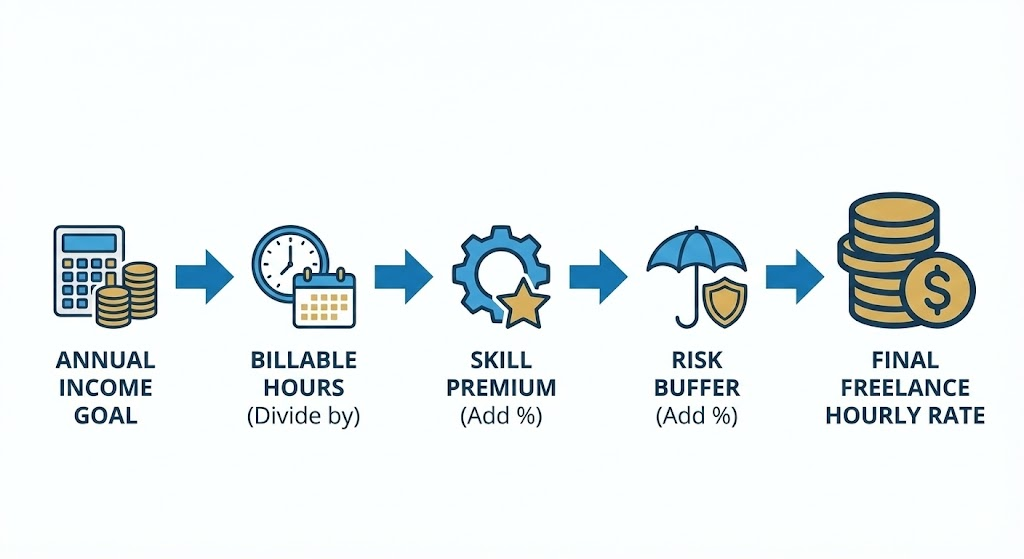
Finally, include a risk buffer. Freelance income is unpredictable. Rates must absorb downtime. Without this buffer, stress increases.
Example calculation:
- Target income: ₹18,00,000
- Billable hours/year: 1,200
- Base rate: ₹1,500/hour
- Final rate with buffer: ₹2,000/hour+
Freelancers transitioning from corporate roles often struggle here, which is why aligning your mindset with a structured Career in Digital Marketing is essential before setting your first rate.
Freelance Rates in India vs Global Markets (Reality Check)
Indian freelancers can charge global rates in 2026. Location-based pricing is obsolete. Clients pay for expertise, reliability, and outcomes. Branding, proof, and communication matter more than geography.
Let us break the reality with numbers. While mid-level freelancers earn ₹800–₹1,500 per hour, entry-level beginners often grind at ₹300–₹500 per hour.
Acknowledging this lower tier is painful but necessary- your goal is to escape this ‘commodity zone’ as quickly as possible. However, the same freelancer serving US or EU clients can charge $30–$75 per hour.
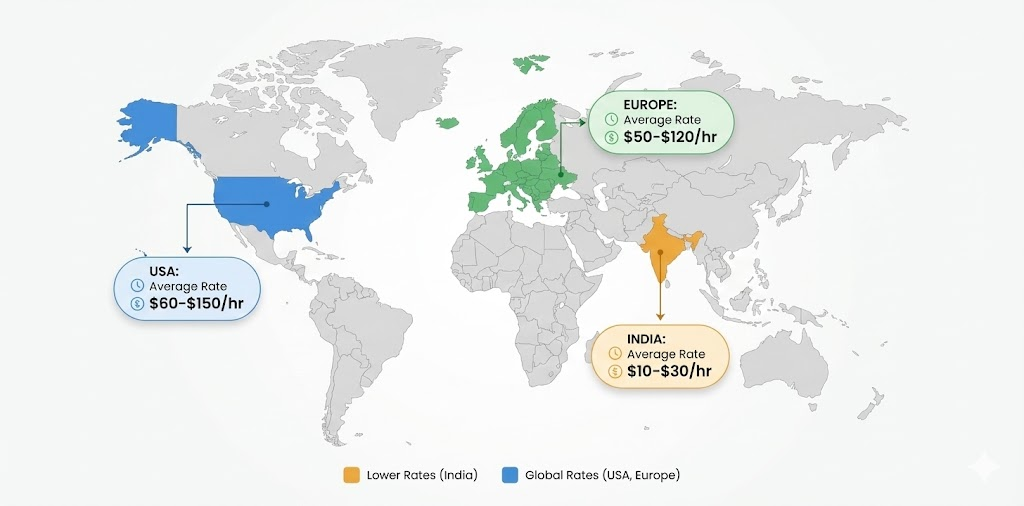
The difference is not skill. It is positioning. Freelancers who understand client business goals command higher fees. Those who sell tasks remain underpaid.
Time zone advantage also plays a role. Indian freelancers offering overnight turnaround gain leverage. Faster delivery equals higher value.
Here is a realistic comparison table:
| Market | Beginner Rate | Intermediate | Expert |
| India (Local) | ₹500/hr | ₹1,200/hr | ₹2,500+/hr |
| Global (USD) | $15/hr | $40/hr | $100+/hr |
Pro Tip (Global Benchmarks): To negotiate effectively, you need to know what your client pays locally. In the US, a skilled digital marketer averages $50–$100/hour, while specialized developers often command $60–$120/hour.
Even if you charge $40/hour, you are offering them massive savings while tripling your local earning potential.
This price disparity is why asking Is Digital Marketing a Good Career? yields a resounding ‘Yes’- but only for those who position themselves for global demand.
How Much Should You Charge for Graphic Design Work?
Graphic designers frequently ask how much to charge. The problem is not pricing. The problem is selling design as art instead of business impact. In 2026, design is judged by conversion, clarity, and brand consistency.
Designers who charge per logo or banner remain stuck. Designers who charge for brand systems scale faster. Clients care about how design influences revenue, not aesthetics alone.
Usage rights matter significantly. A logo used globally has higher value than one used locally. Designers must price based on exposure and business usage.
Design complexity also changes pricing. A landing page designed for ads holds higher value than a static brochure.
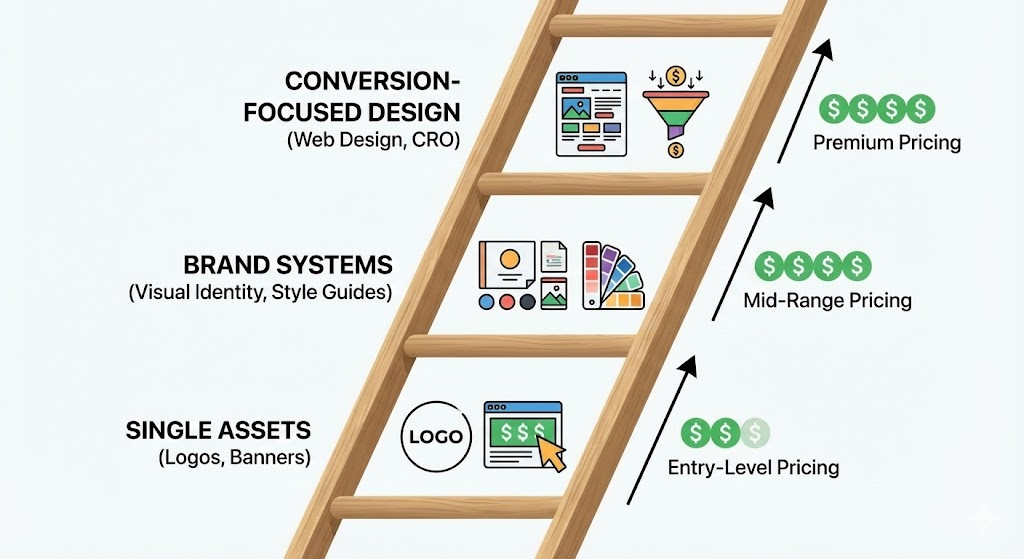
Graphic Design Pricing Benchmarks (India & Global)
Graphic design pricing depends on complexity, usage rights, and business impact. Designers who price per asset earn less. Designers who price per use-case earn more consistently.
Typical pricing ranges:
- Logo design (India): ₹15,000 – ₹60,000
- Brand identity package: ₹75,000 – ₹2,50,000
- Landing page design: ₹25,000 – ₹1,00,000
- Global clients (USD): $500 – $5,000+
Designers aiming for premium clients should focus on business niches. If you want high-paying clients, explore How to Get Web Design Clients Who Pay ₹40,000+ for positioning strategies.
Freelance Writing & Content Pricing (Why Words Are Not the Metric)
Freelance writers often undervalue themselves. Charging per word feels logical. However, in 2026, AI-generated content has reduced per-word value dramatically. Strategy and insight now matter more.
Clients want traffic, conversions, and authority. A 500-word article that ranks is more valuable than 2,000 words that do nothing. Therefore, pricing must shift.
Writers who understand SEO, audience intent, and conversion psychology earn more. Pure writers struggle. Strategic writers thrive.
This shift mirrors broader content trends discussed in How AI Is Affecting Content Marketing.
How Much to Charge for 500 Words in 2026?
Charging per word is outdated. Writers should price based on research depth, SEO intent, and business outcome. A 500-word article varies widely by niche.
For instance, a general lifestyle or entertainment blog post typically commands ₹1,500–₹3,000, whereas technical B2B SaaS content requiring SME interviews and product knowledge often starts at ₹10,000–₹25,000 per piece.
The difference isn’t the word count; it’s the scarcity of the expertise.
Realistic pricing ranges:
| Content Type | India | Global |
| Basic blog | ₹1,500 – ₹3,000 | $50 – $100 |
| SEO article | ₹5,000 – ₹15,000 | $150 – $400 |
| Authority content | ₹20,000+ | $500+ |
Writers planning long-term growth should align with digital marketing ecosystems. You may also explore How to Learn Digital Marketing in 30 Days to increase pricing power.
How to Quote for Freelance Projects Like a Pro?
Professional quotes focus on outcomes, clarity, and boundaries. Freelancers who present tiered pricing and defined deliverables close better deals and face less negotiation.
A strong quote is not cheap.
It is clear.
Clients fear uncertainty more than price. Therefore, your proposal must reduce risk.
Always include deliverables, timelines, revision limits, and payment milestones. Avoid vague language. Precision builds trust.
Tiered pricing works well. It gives clients choice and anchors value. Most clients select the middle option.
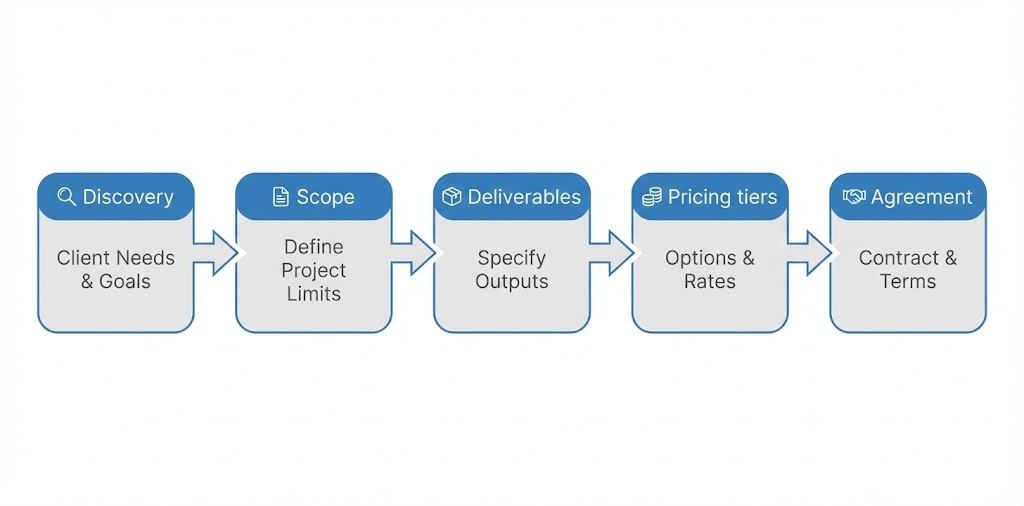
Bullet structure improves clarity:
- Scope of work
- Deliverables
- Timeline
- Pricing tiers
- Payment terms
If proposal writing feels difficult, studying agency-style systems helps. Refer to Pricing Strategy For Digital Marketing Services for structured thinking.
Freelance Pricing Calculator Framework (My Proven Method)
A reliable freelance pricing calculator must factor income goals, billable capacity, expertise premium, and risk buffer. Most tools ignore downtime and unpaid work.
This framework ensures profitability while staying competitive.
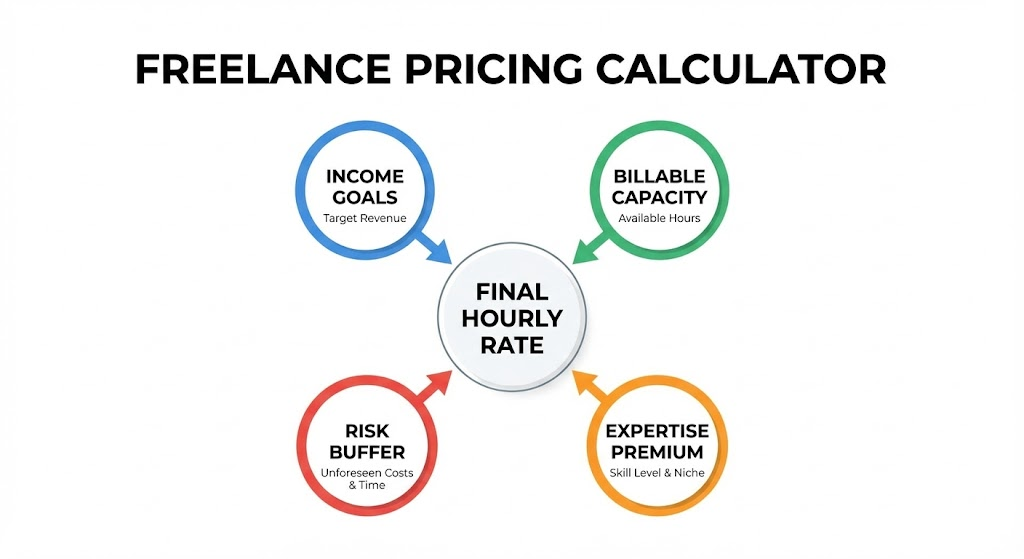
Step 1: Define Annual Income Target
Start with realistic income goals. Ambition is good. However, consistency matters more. Freelancing income fluctuates. Your pricing must absorb that volatility.
Step 2: Calculate True Billable Capacity
Most freelancers can bill only 50–60% of working hours. Admin, learning, and communication consume the rest. Ignoring this creates underpricing.
Step 3: Add Expertise Premium
Specialization increases value. Generalists struggle. If your skill reduces client risk, your price must reflect that advantage.
Step 4: Build a Risk Buffer
A 20–30% buffer protects against dry months. Without this buffer, stress increases. Many freelancers fail because they price too tightly.
| Factor | Description |
| Income Goal | Desired annual earnings |
| Billable Hours | Realistic paid hours |
| Expertise Premium | Skill-based uplift |
| Risk Buffer | Safety margin |
This framework ensures profitability and aligns perfectly with a long-term Digital Marketing Career Roadmap, helping you plan for growth rather than just survival.
Taxes, GST, and Invoicing: Pricing Beyond Gross Income
Freelancers often calculate pricing before tax. This is a dangerous mistake. Net income matters. Gross numbers are misleading. In India, taxes directly affect take-home pay.
GST applies to many freelance services. TDS reduces cash flow temporarily. Currency conversion fees further reduce income from international clients.
Professional freelancers price after tax, not before. This ensures financial stability. Ignoring compliance creates long-term stress.
Proper invoicing also builds credibility. Clients trust freelancers who run structured operations.

How to Charge Tax for Freelance Services in India?
Indian freelancers must account for GST, TDS, and conversion fees while pricing. Ignoring taxes reduces net income silently. Smart freelancers include compliance costs upfront.
Key considerations:
- GST registration threshold and applicability
- TDS deductions by Indian clients
- International payment gateway charges
- Currency conversion losses
Popular tools include Razorpay, PayPal, Wise, and Zoho Invoice. Each has a fee structures that affect pricing.
For freelancers earning through digital services, understanding financial structure is as important as skills. Read Performance Marketing Salary in India to understand income breakdowns.
How to Increase Your Freelance Rates Without Losing Clients?
Successful rate increases are value-led, not abrupt. Freelancers retain clients by improving outcomes, communicating impact, and repositioning services instead of announcing sudden price hikes.
Many freelancers fear raising rates. This fear is misplaced. Clients expect growth. They only resist when the value is unclear.
The correct approach is gradual repositioning. Add strategic input. Improve reporting. Increase reliability. Then adjust pricing.
Communication matters. Explain improvements clearly. Clients pay more when they understand the benefits.
Timing also matters. Raise rates during renewal cycles, not mid-project.
Rate Increase Strategy That Works
Effective rate increases follow the structure:
- Audit the current value delivered
- Identify measurable improvements
- Communicate results proactively
- Introduce revised pricing tiers
Freelancers who follow this approach experience minimal churn. This strategy mirrors consulting models discussed in How to Convince Clients for Digital Marketing.
Freelancing as a Long-Term Career, Not a Side Hustle
Sustainable freelancers invest in authority, systems, and mentorship. Freelancing becomes a career only when treated as a business. Skill stacking and guidance accelerate growth significantly.
Most freelancers remain stuck because they operate reactively. Long-term freelancers build positioning. They invest in learning. They create systems.
Mentorship reduces trial-and-error. In my experience, freelancers with structured guidance grow faster.
This is where AI-first curriculum models with lifetime mentorship, such as AADME’s approach, support sustainable career growth without shortcuts.
Career-focused freelancers eventually move into consulting, agencies, or productized services. This evolution protects income.
If you want to map long-term opportunities, explore the 7 Fastest Ways to Make Money with Digital Marketing.
Proprietary Frameworks
If you want long-term clarity on how to price yourself as a freelancer, frameworks matter more than motivation. In 2026, freelancers who rely on instinct struggle. Freelancers who rely on systems scale.
Most pricing confusion comes from randomness. One client pays a high price. Another negotiates hard. This inconsistency damages confidence. Frameworks eliminate that uncertainty.
In my experience consulting with freelancers across design, marketing, and writing, structured pricing frameworks increase deal closure and reduce stress. Clients trust professionals who explain pricing logically.
Below are three proprietary frameworks that consistently work across markets and experience levels.
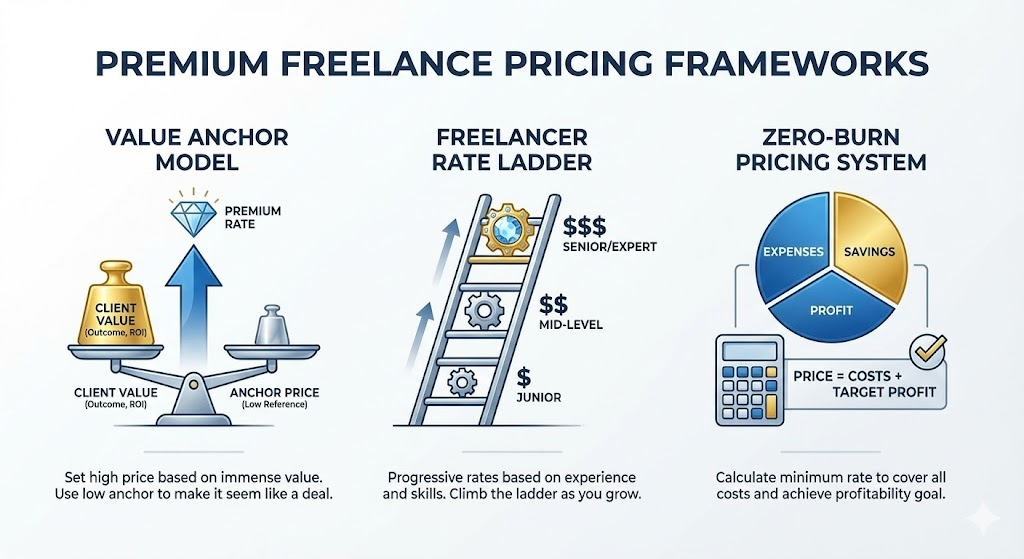
The VALUE Anchor Model™ (Outcome-Based Pricing)
The VALUE Anchor Model™ prices freelance work based on outcomes, impact, and replacement cost. This ensures pricing reflects business value rather than effort or time spent.
This model anchors price to the client’s upside. If your work generates revenue, saves cost, or reduces risk, pricing must reflect that contribution.
Freelancers often hesitate to discuss money tied to results. However, clients already think this way internally. Aligning with their logic builds trust.
Replacement cost is key. If replacing you costs more, your price is justified. This mindset shifts negotiations in your favor.
VALUE Anchor Formula™:
Price = Outcome Value × Business Impact ÷ Replacement Risk
This framework is especially powerful for digital marketers. If you work in this space, review Roles and Responsibilities of a Digital Marketer to align services with outcomes.
The FREELANCER Rate Ladder™ (Career-Based Pricing Growth)
The FREELANCER Rate Ladder™ helps freelancers increase rates logically as they move from beginner to authority. Pricing evolves with positioning, not years of experience.
Most freelancers stagnate because they never change identity. This ladder provides clarity on when and how to increase rates.
Stages of the Rate Ladder:
| Stage | Identity | Pricing Logic |
| Beginner | Task Executor | Hourly |
| Specialist | Skill Expert | Project |
| Authority | Niche Leader | Value-Based |
| Outcome Partner | Business Ally | Revenue Share / Retainers |
Movement up the ladder requires proof, not permission. Freelancers who document results climb faster.
This evolution mirrors professional career paths explained in Top In-Demand Digital Marketing Skills You Can’t Ignore.
The Zero-Burn Pricing System™ (Sustainable Freelancing)
The Zero-Burn Pricing System™ ensures freelancers earn sustainably without burnout. It balances income goals, energy, and capacity to prevent overwork.
Burnout is a pricing problem disguised as a workload issue. Freelancers who charge too little must overwork. Overwork reduces quality. Quality loss reduces pricing power.
This system forces honest capacity assessment. It prioritizes rest, learning, and delivery quality.
Zero-Burn Components:
- Income target
- Maximum weekly workload
- Ideal client type
- Minimum acceptable rate
Freelancers who adopt this system last longer and earn more. Sustainability is a competitive advantage.
Final Expert Advice: Pricing Is Your Competitive Edge
Pricing is not about being expensive. It is about being clear. Freelancers who understand pricing control their careers. Those who ignore it stay stuck.
In 2026, freelancing rewards specialists, not generalists. Outcome thinkers, not task executors. Strategic professionals, not hustlers.
If you treat freelancing like a career, pricing becomes easier. Structured learning and mentorship accelerate this transition. AI-first curriculum models with lifetime mentorship, like AADME’s approach, support this journey without shortcuts.
If you want to explore future-ready career paths, I recommend Is Digital Marketing a Good Career? as your next read.
Frequently Asked Questions: Freelance Pricing in India
How do I set rates for freelance projects in India?
To set freelance project rates in India, calculate your annual income goal, divide it by realistic billable hours, and add a 20–30% buffer for downtime and taxes. Then adjust based on skill demand, project complexity, and client business value. Project-based pricing works better than hourly for most freelancers.
What are the best platforms to calculate freelance fees for Indian freelancers?
Popular platforms to calculate freelance fees in India include Upwork rate calculators, Indie Hackers calculators, Bonsai, and Clockify. However, these tools should be used only as references. Accurate pricing must also include tax impact, unpaid hours, and expertise premium, which most calculators ignore.
How can I use online tools to estimate freelance charges accurately?
Online tools estimate freelance charges by asking for income goals and working hours. To improve accuracy, freelancers must manually adjust results for GST, TDS, platform fees, revisions, and learning time. Without these adjustments, online estimates usually underprice services.
What freelance pricing strategies do industry experts recommend?
Industry experts recommend value-based pricing, tiered packages, and outcome-driven fees instead of hourly rates. Specialists who price based on business impact earn more than generalists. In my experience consulting with 5,000+ professionals, clarity and positioning outperform low pricing every time.
Which payment gateways are most popular for freelancers in India?
The most popular payment gateways for Indian freelancers are Razorpay, PayPal, Wise, Payoneer, and Stripe (via partners). Wise is preferred for low conversion fees, while Razorpay works best for Indian clients. Payment gateway fees should always be included in pricing.
How do I create invoices for freelance work using online software?
Freelancers can create professional invoices using tools like Zoho Invoice, Razorpay Invoices, QuickBooks, and FreshBooks. A proper invoice includes client details, GST if applicable, service description, payment terms, and due date. Structured invoicing improves credibility and payment speed.
How do I charge tax for freelance services in India?
Freelancers in India must charge GST if their turnover crosses the threshold or if services are taxable. Indian clients may deduct TDS before payment. International clients usually do not deduct tax, but income must still be declared. Pricing should always be calculated after tax impact.
How much do Indian freelancers typically charge per hour for design work?
Indian freelance designers typically charge ₹500–₹1,500 per hour at beginner levels, ₹2,000–₹3,500 at intermediate levels, and ₹5,000+ per hour as specialists. Designers serving global clients often charge $30–$100 per hour based on expertise and business impact.
How should I price freelance writing services competitively?
Freelance writing services should be priced based on research depth, SEO intent, and conversion impact, not per word. In India, competitive rates range from ₹1,500 for basic content to ₹25,000+ for authority or SEO-driven content. Strategic writers earn significantly more.
How can Indian freelancers accept international payments legally?
Indian freelancers can accept international payments legally through Wise, PayPal, Payoneer, or Stripe partners. Payments must be received in compliance with RBI guidelines and reported as foreign income. Conversion fees and platform charges should be included in freelance pricing models.
How do I charge for freelance work as a beginner?
Beginners should start with project-based pricing, not ultra-low hourly rates. Focus on clarity, defined scope, and learning speed rather than competing on price. Beginners often undercharge out of fear. This attracts difficult clients. Instead, beginners should limit the scope and deliver well.
Confidence comes from structure, not experience. Clear proposals reduce negotiation pressure. If you are just starting, read How to Become a Freelance Digital Marketer for foundational guidance.
How much should I charge per hour as a freelancer in India?
Indian freelancers typically charge ₹500–₹2,500 per hour, depending on skill and market. Global clients pay significantly more for the same expertise. Hourly pricing should be transitional. Long-term growth requires project or value-based pricing. Skills, niche, and communication matter more than location.
How much to charge for 500 words?
A 500-word article can range from ₹1,500 to ₹25,000 depending on strategy, SEO intent, and business impact. Word count alone is not a pricing metric. Content that ranks or converts has higher value. Strategic writers price accordingly. If content marketing interests you, explore Digital Marketing for Beginners.
How do freelancers calculate pay accurately?
Freelancers calculate pay using income goals, billable capacity, and risk buffers. Random pricing leads to instability. Backward calculation prevents underpricing. Systems beat guesswork.
How do I quote for freelance work professionally?
Professional quotes focus on outcomes, scope, and clarity. Tiered pricing improves conversion and positions freelancers as consultants. Avoid vague proposals. Precision builds authority.