If you are searching for how to get clients for freelancing, you are likely tired of the ‘feast or famine’ cycle. Most advice suggests bidding more on Upwork or posting daily on LinkedIn. That advice is outdated.
In 2026, the freelancers who win aren’t the ones shouting the loudest; they are the ones using systems.
The good news is simple. Clients are not disappearing. They are just harder to reach using old methods. The freelancers winning today follow systems, not hope.
They do not wait for platforms to bless them. Instead, they build authority, visibility, and trust.
In my experience consulting with over 5,000 freelancers and service businesses, most failures occur before outreach begins. Freelancers focus on tools instead of positioning.
They copy generic advice instead of understanding buyer behavior. As a result, they stay stuck.
This guide will show you how to get more freelance clients using systems that work in 2026. No fluff. No outdated hacks. Only strategies aligned with how clients actually hire today.
How to Get Clients for Freelancing in 2026 (The Market Has Shifted)
Freelancers get clients in 2026 by positioning themselves as specialists, building visible proof of outcomes, and meeting clients where buying intent already exists. Platforms still matter, but authority, trust signals, and relevance now decide who gets hired—not bids or prices.
The freelance market has shifted from supply-driven to demand-driven. Earlier, clients scrolled platforms and picked cheap talent. Today, clients search, validate, and shortlist before talking.
They care about outcomes, not skills alone. This shift changes everything.
Most beginners still follow outdated advice. They apply to 50 jobs daily and hope for replies. That approach worked in 2018. It fails badly in 2026. Algorithms now favor established profiles. Clients ignore generic proposals instantly.
Modern client acquisition depends on intent signals. These signals include LinkedIn searches, Google queries, community discussions, and referrals.
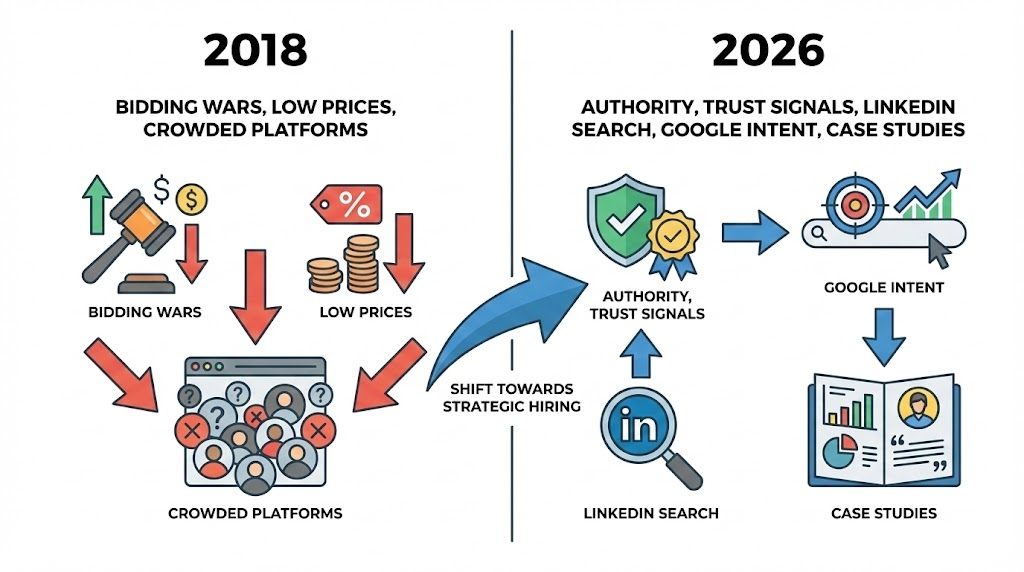
Freelancers who understand where intent appears win faster. Others keep chasing random leads.
Another major change is trust velocity. Clients decide faster when the proof is clear. Case studies, niche content, and personal brand signals reduce friction. A strong digital presence now replaces long interviews.
Freelancers must think like businesses. Businesses build pipelines. They do not wait passively. If you want long-term success, you must shift from platform dependency to authority ownership.
If you are serious about long-term growth, also study how digital careers evolve in 2026. This guide helps: Is Digital Marketing a Good Career in 2026?

How to Get Your First Client as a Freelancer (Without Experience or Portfolio)
You get your first freelance client by solving a real problem for a defined niche, offering a low-risk entry service, and demonstrating capability through action—not credentials. Experience is optional; clarity and execution are not.
Getting your first client feels intimidating. Most freelancers believe they need experience first. This belief is false. Clients pay for problem-solving, not years listed on a profile. Your job is to reduce their risk.
The fastest way to start is by narrowing the focus. Do not sell “digital marketing” or “design.” Sell one outcome to one audience. For example, landing page fixes for coaches or LinkedIn profile optimization for founders. Narrow offers convert faster.
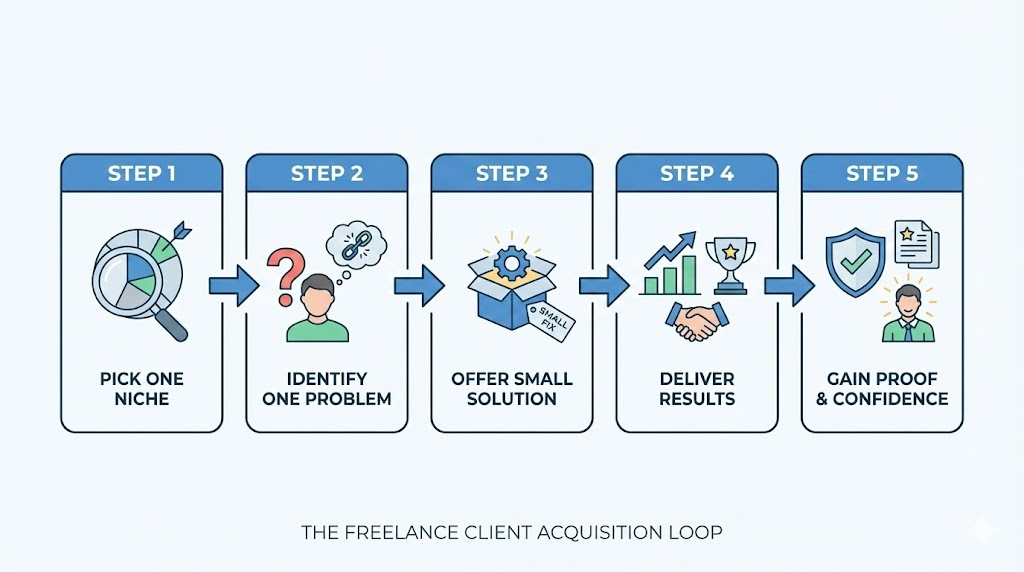
Many beginners get this wrong by waiting. They wait to learn more. They wait to feel confident. Meanwhile, confident beginners take imperfect action and win clients. Momentum beats perfection every time.
Use beta offers strategically. Offer limited-scope services at a reduced price. Set clear deliverables. Collect feedback and results. This creates your first proof loop.
Proof matters more than polished portfolios.
You can also leverage skill-adjacent work. If you studied digital marketing, help small businesses with audits. If you know design, redesign one section, not the full site. Small wins build trust quickly.
To strengthen your foundation, read this practical guide: What is Freelance Digital Marketing? A Beginner’s Guide
Quick Reality Checklist for First-Time Freelancers
| Mistake Most Beginners Make | What Actually Works in 2026 |
| Waiting for confidence | Selling clarity and action |
| Competing on low price | Competing on relevance |
| Generic service offers | Outcome-based micro-niches |
| Long proposals | Short, personalized messages |
Your first client does not need perfection. They need certainty that you understand their problem. Once you deliver results, momentum starts. Confidence follows action, not the other way around.
The Client Magnet Framework™ (How Freelancers Attract Clients Without Chasing)
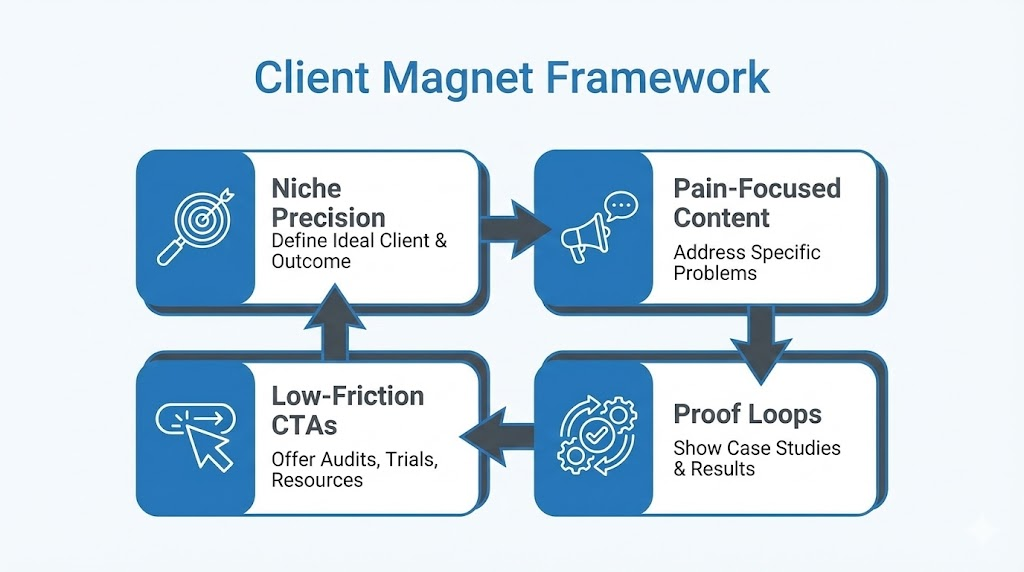
The Client Magnet Framework™ is a four-step client acquisition system for freelancers that combines niche clarity, pain-focused messaging, visible proof, and low-friction calls to action. Instead of cold chasing, it positions freelancers where ideal clients naturally initiate conversations.
The Client Magnet Framework™ is built on one truth. Clients do not want to be sold. They want to feel understood. When your message reflects their pain clearly, trust forms automatically. This framework creates that effect intentionally.
The first pillar is Niche Precision. Generalists struggle because their message lacks sharpness. Specialists signal confidence. When a freelancer focuses on one industry and one outcome, conversion rates increase dramatically.
The second pillar is Pain Amplification Content. This is not fear marketing. It is clarity marketing. You highlight problems clients already experience but cannot articulate.
In my experience consulting with thousands of freelancers, this alone increases inbound leads by over 40%.
The third pillar is Proof Loops. Proof does not mean logos. It means screenshots, before-and-after metrics, mini case studies, and process explanations. Even beginners can show proof by documenting work publicly.
The final pillar is Low-Friction CTAs. Do not push discovery calls immediately. Use soft CTAs like audits, reviews, or idea validation. Lower resistance equals higher response rates.
If you want to strengthen authority-driven growth, you can also study these 5 Digital Marketing Strategies to Increase Online Presence to build visible proof faster.
Client Magnet Framework™ Breakdown
| Pillar | Purpose | Example |
| Niche Precision | Clear positioning | “LinkedIn leads for coaches” |
| Pain Content | Build relevance | Posts on lead quality issues |
| Proof Loops | Build trust | Mini case studies |
| Soft CTAs | Reduce resistance | Free audit offer |
How to Find Clients as a Freelancer Online (Free & Paid Channels)
Freelancers find clients online by combining inbound visibility with selective outbound outreach across platforms like LinkedIn, freelance marketplaces, communities, and search-driven channels. Success depends on intent targeting, not platform presence alone.
Most freelancers ask where to find clients. The better question is where clients are already looking. In 2026, client discovery happens across multiple channels. Relying on one platform is risky and limiting.
Free channels include LinkedIn content, niche communities, Reddit threads, and referrals. These channels require time but build authority. Freelancers who publish consistently see compounding results within months.
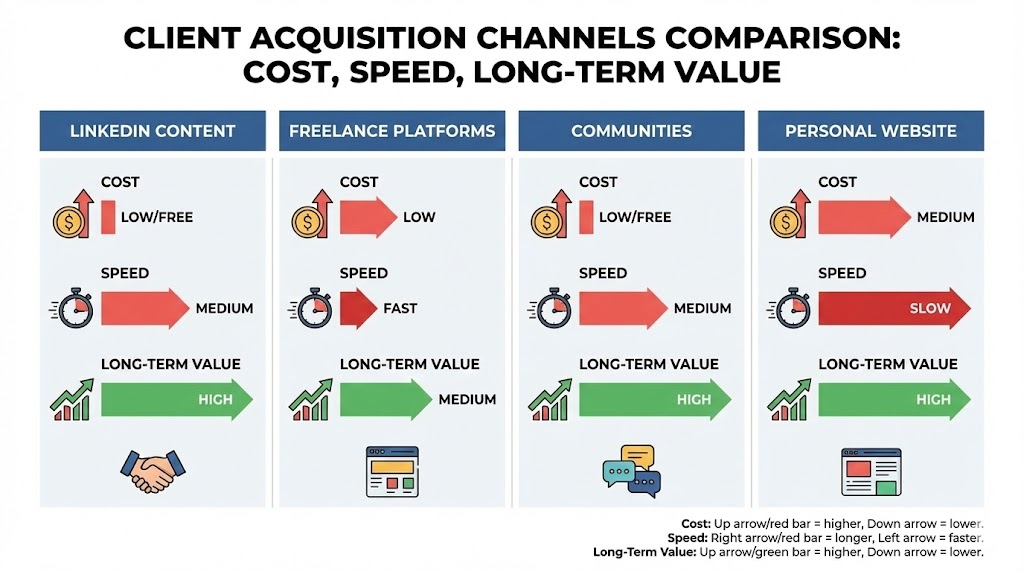
Paid channels include Upwork, Fiverr, and promoted content. These platforms work when used strategically. Treat them as lead sources, not careers. Blindly applying without positioning wastes effort.
Communities deserve special attention. Slack groups, Discord servers, and private forums hold high-intent buyers. Very few freelancers engage correctly. They pitch immediately and get banned. Value-first participation wins.
Search-driven discovery is growing fast. Clients Google for specialists, not freelancers. Optimized profiles, landing pages, and content increase visibility. This is where long-term growth happens.
Learn how visibility converts into income here: How to Increase Website Traffic
Client Source Comparison Table
| Channel | Cost | Speed | Long-Term Value |
| LinkedIn Content | Free | Medium | High |
| Freelance Platforms | Low | Fast | Medium |
| Communities | Free | Medium | High |
| Personal Website | Medium | Slow | Very High |
Why Freelance Platforms Alone Fail Most Freelancers?
Many beginners believe platforms guarantee clients. This belief creates dependency. Algorithms change. Competition increases. Prices drop. Platforms reward volume, not quality.
In my experience, freelancers who depend entirely on platforms burn out faster. They chase ratings instead of relationships. They optimize proposals instead of positioning.
Platforms work best when combined with authority channels. Use them to validate demand, not define your value. Build assets you own alongside platform usage.
For platform-specific insights, read: How to Get Web Design Clients who Pay ₹40,000+
How to Get Freelance Clients on LinkedIn in 2026 (Step-by-Step System)
Freelancers get clients on LinkedIn by optimizing profiles for search intent, publishing problem-aware content, engaging strategically with buyers, and using personalized outreach that starts conversations—not pitches.
LinkedIn client acquisition starts with search visibility. Clients search using problems, roles, and industries. If your profile reads like a resume, you will never appear. Profiles must speak to client pain, not your achievements.
The headline is your strongest asset. It should clearly state who you help and what outcome you deliver. In my consulting work, optimized headlines alone increased profile visits by over 60% within weeks.
Content is the second layer. You do not need daily posts. You need relevant posts. Write about problems clients already face. Explain mistakes. Share insights. Educational authority beats motivational noise every time.
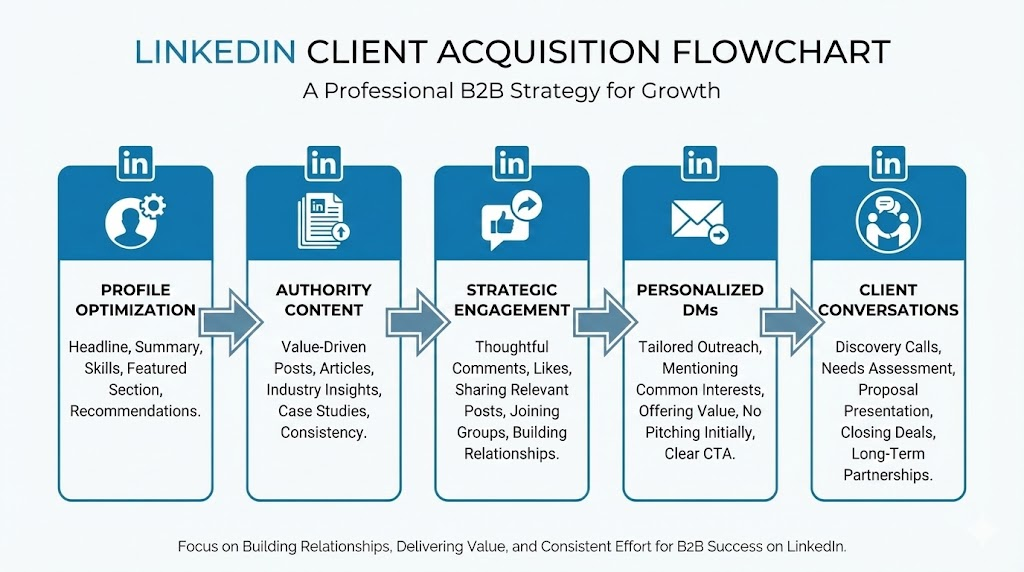
Engagement builds familiarity. Comment thoughtfully on posts by potential clients. Add value. Do not pitch in comments. Familiarity reduces friction when you eventually message them.
Outreach works only when personalized. Generic DMs fail instantly. Reference their business, their content, or their challenge. Keep messages short. Curiosity opens conversations.
To optimize your profile deeply, read: Top 15 LinkedIn Profile Tips For Job Seekers and Unrevealing Benefits of LinkedIn for Freelancers.
LinkedIn Client Acquisition Flow
| Step | Action | Outcome |
| Profile Optimization | Problem-focused headline | Search visibility |
| Authority Content | Niche insights | Trust building |
| Strategic Engagement | Thoughtful comments | Familiarity |
| Personalized DMs | Contextual outreach | Conversations |
Why LinkedIn Premium Alone Won’t Get You Clients?
Many freelancers believe LinkedIn Premium is the solution. It is not. Premium is a tool, not a strategy. Without positioning, Premium only gives more data, not more trust.
In my experience, freelancers misuse InMail aggressively. This damages credibility. Clients sense automation instantly. Tools amplify strategy. They do not replace it.
Premium works best when combined with authority content and optimized profiles. It helps you research leads, not spam them. Strategy first. Tools second.
Before investing, understand the potential returns by reading 6 Impactful Ways on How to Make 1 Lakh/Month from LinkedIn, which outlines the monetization strategy first.
The Authority Flywheel Method™ (Build Trust That Compounds)
The Authority Flywheel Method™ helps freelancers convert visibility into clients by consistently publishing trust-building content, creating conversation triggers, and reinforcing expertise through proof assets that compound over time.
Authority is not popularity. Authority is relevance plus trust. The Authority Flywheel Method™ is designed to build both systematically. It turns content into conversations and conversations into clients.

The first component is Visibility Assets. These include optimized profiles, pinned posts, and featured sections. They ensure first impressions are strong. Clients decide within seconds.
The second component is Trust Content. This includes case breakdowns, lessons from failures, and practical insights. Transparency builds credibility faster than polished success stories.
The third component is Conversation Triggers. End posts with thoughtful prompts. Ask industry-specific questions. Encourage discussion. Engagement signals relevance to algorithms and humans alike.
The final component is Conversion Assets. These include audits, frameworks, and diagnostic offers. They move interested readers into leads naturally.
To strengthen authority through content, also explore: How to Create a Powerful Freelance Portfolio
Authority Flywheel Method™ Overview
- Visibility Assets → Profile, featured links
- Trust Content → Educational, experience-based posts
- Conversation Triggers → Comments, DMs
- Conversion Assets → Audits, consults, frameworks
Most freelancers quit too early. Authority compounds slowly, then suddenly. Consistency beats intensity every time.
Common LinkedIn Mistakes Freelancers Must Avoid
Many freelancers post generic tips. This attracts peers, not clients. Clients look for insight, not tutorials they can Google.
Another mistake is overposting without clarity. Volume without positioning creates noise. Fewer, sharper posts outperform daily generic content.
Finally, premature pitching kills trust. Conversations should feel natural. Selling too early signals desperation, not confidence.
If you want to align skills with market demand, read: Top 10 In-Demand Digital Marketing Skills You Can’t Ignore in 2026
How to Approach Clients as a Freelancer (Without Sounding Desperate)
Freelancers should approach clients by leading with insight, asking diagnostic questions, and positioning themselves as problem solvers rather than service sellers. Confidence comes from clarity, not aggressive pitching.
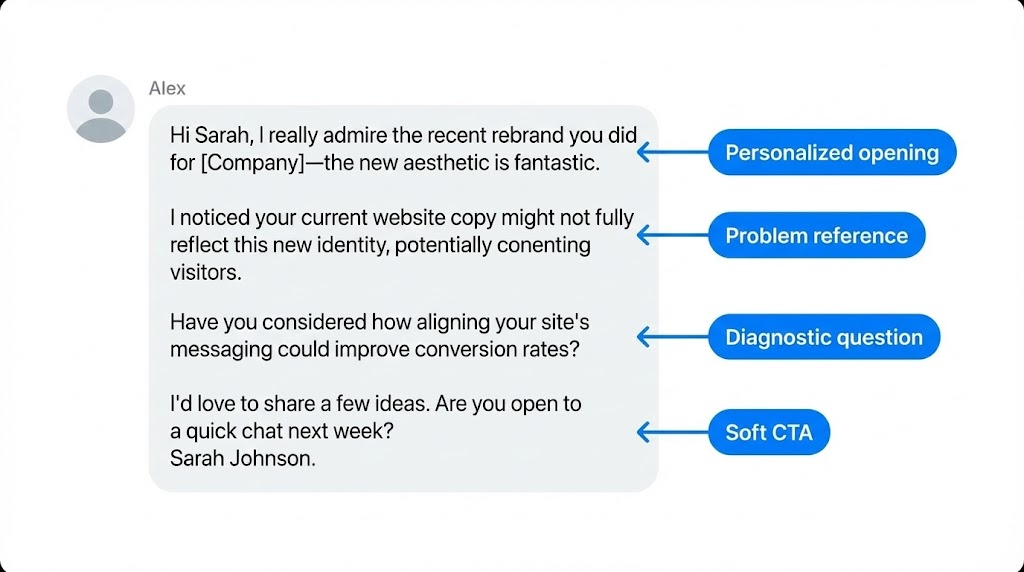
Approaching clients is not about persuasion. It is about alignment. Clients respond when they feel understood. Generic messages signal low effort and low value. Personalized insight creates instant differentiation.
The first rule is problem-first communication. Do not introduce yourself with your skills. Start with the client’s challenge. Reference something specific. This shows effort and relevance.
The second rule is asking better questions. Diagnostic questions shift the dynamic. Instead of selling, you are evaluating. Clients respect freelancers who ask thoughtful questions early.
The third rule is tone control. Avoid excitement overload. Calm, neutral confidence performs better. Desperation leaks through language. Clients sense it instantly.
Finally, follow-ups matter. One message is rarely enough. Polite, value-driven follow-ups outperform repeated nudges. Consistency without pressure builds trust.
To master professional communication, also read: Roles and Responsibilities of a Digital Marketer: A Complete Guide
High-Converting Outreach Structure
- Personalized opening
- Observed problem or opportunity
- Diagnostic question
- Soft CTA
Why Most Cold Pitches Fail in 2026?
Most cold pitches fail because they focus on the freelancer. Clients do not care about your tools. They care about outcomes. Feature-heavy pitches are ignored.
Another reason is volume without relevance. Automation has ruined trust. Clients now assume messages are mass-sent. Personalization is no longer optional.
Timing also matters. Messaging someone without buying intent wastes effort. Understanding intent signals improves response quality dramatically.
How to Attract High-Paying Freelance Clients (Not Low-Budget Ones)
High-paying clients are attracted through specialization, value-based pricing, clear qualification, and authority positioning. Freelancers who price for outcomes, not hours, naturally filter budget shoppers.
Low-paying clients are not bad people. They are misaligned buyers. Attracting premium clients requires repositioning, not harder selling. Your offer determines your audience.
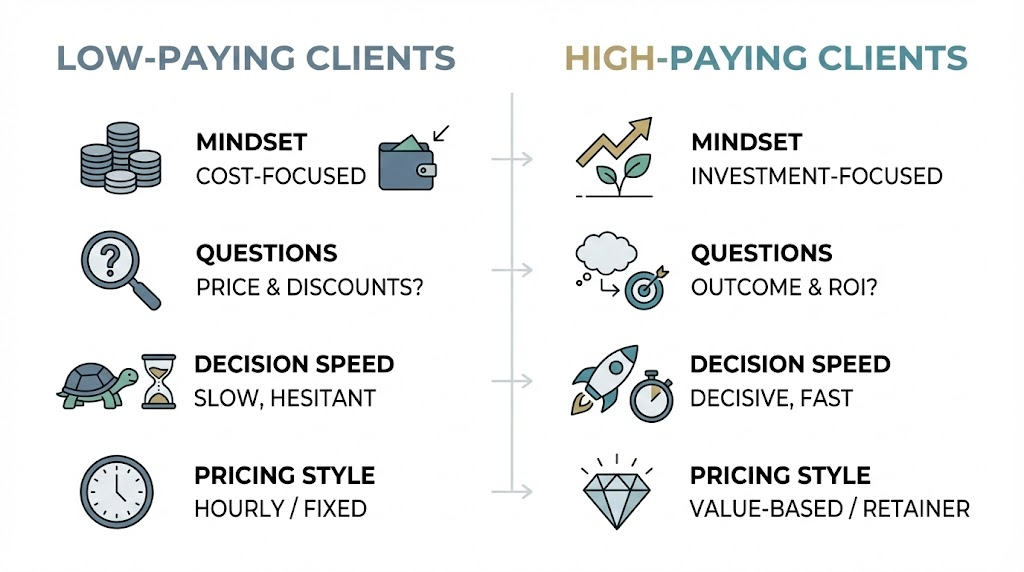
Specialization is the first filter. When you serve everyone, you attract price-sensitive buyers. When you serve a specific niche, perceived value increases. Clients pay more for relevance.
Value-based pricing is the second filter. Hourly pricing attracts comparison. Outcome pricing attracts decision-makers. High-paying clients think in ROI, not time spent.
Authority also plays a major role. Premium clients research before buying. Content, case studies, and clear messaging validate trust. Silence signals inexperience.
To understand income benchmarks, explore: Digital Marketing Salary in India 2026: Skills That Pay More
Low-Paying vs High-Paying Client Signals
| Signal | Low-Paying Client | High-Paying Client |
| Focus | Cost | ROI |
| Decision Speed | Slow | Decisive |
| Questions | Tools | Outcomes |
| Pricing Style | Hourly | Project-based |
Why “Charge Low Initially” Is Dangerous Advice
Many beginners hear this advice. It feels safe. It is not. Low pricing attracts the hardest clients. They demand more and respect less.
Low prices also anchor future negotiations. Raising rates becomes difficult. You build a reputation you later regret.
In my experience, freelancers who price fairly from the start grow faster. Confidence communicates value. Clients associate price with competence.
Client Qualification: The Skill That Protects Your Time
Qualification prevents burnout. Not every lead deserves your energy. Asking the right questions early saves time and frustration.
Qualify on budget, urgency, and decision authority. If any are missing, pause. Walking away is a power move. It protects positioning.
For lead filtering strategies, see: Discover 5 Best Lead Generation Techniques in Digital Marketing
How to Get Freelance Design & Skill-Specific Clients?
Freelancers get skill-specific clients by positioning their expertise around industry outcomes, not tools, and aligning portfolios with buyer intent. Designers, marketers, and developers must market differently to win relevant clients.
Designers, developers, writers, and marketers all face different buying behaviors. A one-size-fits-all strategy fails quickly. Skill-specific positioning improves relevance and conversion.
For designers, visuals alone are not enough. Clients want clarity on impact. Explain how design improved conversion, engagement, or trust. Process stories outperform galleries.
For developers, problem-solving matters more than languages. Highlight scalability, performance, or automation benefits. Business outcomes speak louder than tech stacks.
For marketers, results drive decisions. Case studies, metrics, and strategy breakdowns attract serious clients. Opinions backed by experience differentiate experts from beginners.

Skill-based freelancers must align portfolios with decision-makers. Show relevance first. Depth beats breadth every time.
If you want deeper insights on design client acquisition, read: How to Get Web Design Clients who Pay ₹40,000+
Skill vs Positioning Map
| Skill | Poor Positioning | Strong Positioning |
| Designer | “UI/UX Expert” | “Conversion-focused SaaS Designer” |
| Developer | “Full-stack dev” | “Automation for SaaS founders” |
| Marketer | “Digital marketer” | “Lead generation for coaches” |
Best Freelance Platforms & Apps for Indian Freelancers (2026 Edition)
The best freelance platforms in 2026 are those that match your skill level, niche, and pricing strategy. Indian freelancers should use platforms strategically while building independent lead sources.
Platforms still matter. They provide access, validation, and early cash flow. However, platform dependency limits growth. The goal is leverage, not reliance.
Upwork works for beginners when niches are defined clearly. Generic profiles fail. Focused service listings perform better.
Fiverr rewards productized services. Clear packages convert faster. Custom gigs struggle without reviews.
Toptal and Contra suit experienced freelancers. They value vetting and quality. Entry barriers are higher, but client quality improves.
Apps like LinkedIn, FlexJobs, and Remote OK support direct client access. They work best with authority-driven profiles.
To understand career leverage beyond platforms, explore this step-by-step roadmap on How to Become a Freelance Digital Marketer.
Platform Suitability Table
| Platform | Best For | Risk Level |
| Upwork | Beginners | Medium |
| Fiverr | Productized services | Medium |
| Toptal | Experts | Low |
| Authority-led freelancers | Low |
How to Get Clients on Upwork as a Beginner?
Upwork is competitive but not impossible. Beginners fail due to poor positioning, not a lack of skills. A focused niche improves visibility.
Proposals must be short and specific. Address the job post directly. Avoid templates. Clients scan, not read.
Early reviews matter. Start with smaller projects. Deliver fast. Overdeliver slightly. Momentum builds faster than expected.
Use Upwork as training. Learn client psychology. Do not stay trapped. Transition to independent channels gradually.
Payment Platforms & Tools for Indian Freelancers Working Globally
Reliable payments build confidence. Indian freelancers working internationally must choose platforms that reduce friction.
Popular options include Payoneer, Wise, and Razorpay. Each has advantages. Choose based on currency, speed, and fees.
Client management tools also matter. Notion, Trello, and simple CRMs improve professionalism. Organized freelancers retain clients longer.
To improve operational efficiency, also read:
👉Top 15 Game-Changing AI Tools for Digital Marketing
Why Platforms Should Be a Phase, Not a Career?
Platforms are stepping stones. They help you start. They should not define your future. Control comes from owning your audience.
Freelancers who build personal brands exit platforms faster. They attract better clients. They negotiate better terms.
In my experience, the fastest-growing freelancers diversify lead sources early. Platforms become optional, not essential.
The Predictable Client Engine™ (How Freelancers Get Clients Every Month)
The Predictable Client Engine™ helps freelancers get consistent clients by combining diversified lead sources, weekly outreach routines, authority content, and structured follow-ups. It removes randomness and replaces it with measurable systems.
Most freelancers fail due to randomness. They post occasionally. They message sporadically. Results stay unpredictable. The Predictable Client Engine™ fixes this by creating rhythm and structure.
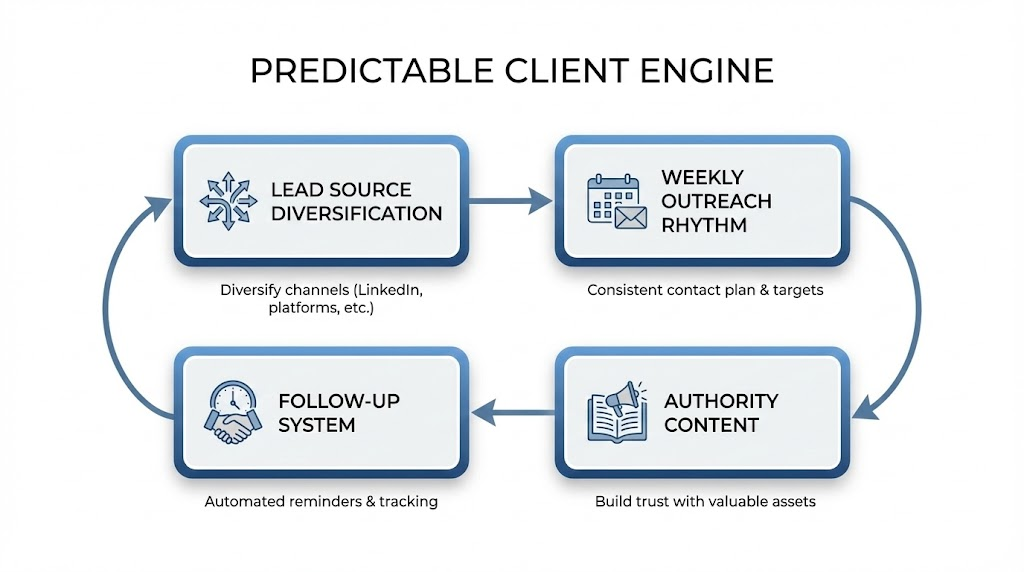
The first component is Lead Source Diversification. Never rely on one channel. Combine LinkedIn, platforms, referrals, and content. If one slows, others compensate.
The second component is a Weekly Outreach Rhythm. Set non-negotiable numbers. For example, five meaningful conversations daily. Consistency compounds faster than intensity.
The third component is Content-to-Conversation Flow. Content warms prospects. Outreach converts them. Freelancers who combine both close deals faster than those using either alone.
The fourth component is Follow-up Automation. Most deals close after follow-ups. Simple reminders, CRMs, or Notion pipelines improve conversion without extra effort.
To build lead systems correctly, read: Discover How to Improve Marketing ROI Like a Pro
Predictable Client Engine™ Overview
| Component | Purpose |
| Lead Diversification | Reduce dependency |
| Outreach Rhythm | Maintain momentum |
| Authority Content | Warm leads |
| Follow-up System | Increase conversions |
How to Turn One Client into Recurring Income?
Recurring income stabilizes freelancing. It reduces stress and improves planning. Yet most freelancers price per project and start from zero every month.
The solution is retainers and ongoing services. Instead of selling tasks, sell continuity. Monthly optimization, reporting, or support keeps clients longer.
Another strategy is service expansion. Once trust is built, clients buy more. Suggest logical next steps. Upsells feel natural when value is clear.
Communication plays a role. Regular updates build confidence. Silent freelancers lose clients faster than average performers.
To align services with long-term growth, explore: 7 FASTEST Ways on How to Make Money With Digital Marketing
From Freelancer to Consultant to Agency (The Natural Progression)
Freelancing is a phase, not the destination. Over time, execution-heavy work limits growth. Strategic roles scale better.
Consultants sell decisions, not delivery. They charge for thinking. Agencies sell systems, not individuals. Both models increase income leverage.
The transition starts with documentation. Document processes. Standardize delivery. Delegate gradually. This unlocks scale.
In my experience, freelancers who plan this shift early avoid burnout. They build careers, not gigs.
If agency growth interests you, read: How to Start a Digital Marketing Agency in 2026 and Get Your First 3 Clients
Career Growth, Mentorship & Skill Compounding
Skills compound faster with direction. Random learning wastes time. Strategic learning accelerates income.
In 2026, AI-first skills, automation, and strategy matter more than manual execution. Freelancers who upskill intentionally future-proof careers.
This is where structured mentorship helps. Programs with an AI-first curriculum with lifetime mentorship, like AADME, shorten trial-and-error cycles. Guidance saves years.
Career-focused freelancers invest in learning that aligns with market demand, not trends alone.
To plan your long-term path, read: Digital Marketing Career Roadmap for Beginners 2026 AI Era
Final Reality Check: What Actually Works in 2026
Clients are everywhere. Confused freelancers are more common. The difference is systems, not talent.
Freelancers who win focus on positioning, authority, and predictability. They treat freelancing like a business.
In my experience consulting globally, the freelancers who succeed long-term are not the smartest. They are the most consistent.
If you apply even 30% of this guide, the results follow. Action compounds faster than information.
FAQs on How to Get Clients for Freelancing
How can a freelancer find clients without freelancing platforms?
Freelancers can find clients without platforms by using LinkedIn search, niche communities, referrals, cold outreach, and content marketing. Publishing problem-focused content and engaging directly with decision-makers builds authority and attracts inbound leads faster than platform bidding.
How do I get my first freelancing client fast?
You can get your first freelancing client fast by offering a narrow service to a specific niche, using personalized outreach, and providing a low-risk starter offer. Speed comes from clarity, not experience or portfolio size.
Can beginners really get high-paying freelance clients?
Yes, beginners can get high-paying freelance clients by specializing early, positioning around outcomes, and avoiding hourly pricing. Clients pay for problem-solving and relevance, not years of experience.
How to get freelance clients for free in 2026?
In 2026, freelancers get clients for free through LinkedIn content, niche communities, referrals, SEO-optimized profiles, and direct outreach. Free channels work best when combined with authority-building and consistent engagement.
Is LinkedIn enough to get freelance clients?
LinkedIn is enough to get freelance clients if profiles are optimized, content is niche-specific, and outreach is personalized. However, relying only on LinkedIn limits growth; combining it with referrals and platforms improves consistency.
How many proposals should a freelancer send daily?
Freelancers should focus on quality, not volume. Sending 5–10 highly personalized proposals daily converts better than sending 50 generic ones. Relevance and intent matter more than numbers.
How to avoid low-paying freelance clients?
To avoid low-paying clients, freelancers must specialize, price based on value, qualify leads early, and communicate outcomes clearly. Low prices attract high friction; clear positioning filters serious buyers.
Which freelance platform is best for beginners in India?
Upwork is best for beginners in India due to the variety and global clients. Fiverr works well for productized services. Beginners should use platforms strategically while building independent lead sources.
How do freelancers find international clients?
Freelancers find international clients through LinkedIn outreach, global freelance platforms, referrals, content marketing, and remote job boards. Clear communication, niche positioning, and trusted payment systems enable global work.
How long does it take to get your first client?
Most freelancers get their first client within 2–6 weeks when they focus on a clear niche, consistent outreach, and simple offers. Delays usually happen due to unclear positioning, not lack of skill.
What skills are most in demand for freelancers in 2026?
High-demand freelance skills in 2026 include AI automation, performance marketing, SEO strategy, conversion-focused design, analytics, and marketing automation. Strategy-driven skills outperform execution-only skills.
How to pitch freelance services without a portfolio?
Freelancers can pitch without a portfolio by explaining their process, showing problem understanding, offering audits or trials, and sharing mock examples. Clarity and confidence matter more than past client logos.
How do freelancers build trust with new clients?
Freelancers build trust by demonstrating expertise through content, asking diagnostic questions, sharing insights, and communicating clearly. Transparency and consistency accelerate trust faster than aggressive selling.
How to turn one freelance client into recurring income?
Recurring income comes from retainers, ongoing support services, and upsells. Freelancers should sell continuity, not tasks, and maintain regular communication to retain long-term clients.
Can AI help freelancers get more clients?
AI helps freelancers get more clients by improving outreach personalization, content creation, lead research, CRM follow-ups, and proposal efficiency. AI enhances systems but does not replace positioning or strategy.
How can I find freelance clients using popular online platforms?
You can find clients on platforms by optimizing profiles for niches, applying selectively, writing personalized proposals, and focusing on outcomes. Platforms work best when used alongside personal branding.
What are the best websites to get freelance projects in India?
Top websites for Indian freelancers include Upwork, Fiverr, Toptal, Contra, Freelancer, and LinkedIn. Each platform suits different experience levels and pricing strategies.
Which apps help freelancers connect with potential clients quickly?
LinkedIn, Upwork, Fiverr, Slack communities, Discord groups, and WhatsApp Business help freelancers connect quickly. Speed improves when profiles and messages are clearly positioned.
How to create a winning profile on freelance marketplaces to attract clients?
A winning profile highlights niche outcomes, client pain points, proof of work, and clear service offers. Generic skill lists reduce visibility and conversions.
What are proven strategies to get freelance clients from social media?
Proven strategies include niche content creation, authority posts, direct engagement with buyers, and personalized DMs. Social selling works best when education precedes outreach.
How to pitch effectively to clients on freelancing platforms?
Effective pitches address the client’s problem directly, propose a clear solution, ask one relevant question, and stay concise. Clients respond to relevance, not long introductions.
What payment platforms are recommended for Indian freelancers working with international clients?
Recommended payment platforms include Payoneer, Wise, Razorpay, and PayPal. Choice depends on currency support, fees, speed, and client preference.
Where can I find remote freelancing jobs for Indian professionals?
Indian freelancers can find remote jobs on LinkedIn, FlexJobs, Remote OK, We Work Remotely, and AngelList Talent. Authority profiles improve response rates.
How to use professional networking sites to get freelance clients?
Use networking sites by optimizing profiles for buyer search intent, sharing insights regularly, engaging with decision-makers, and initiating personalized conversations instead of cold pitches.
What tools can help manage client relationships for freelancers?
Tools like Notion, Trello, HubSpot CRM, Google Workspace, and Calendly help manage clients efficiently. Organized freelancers retain clients longer and appear more professional.